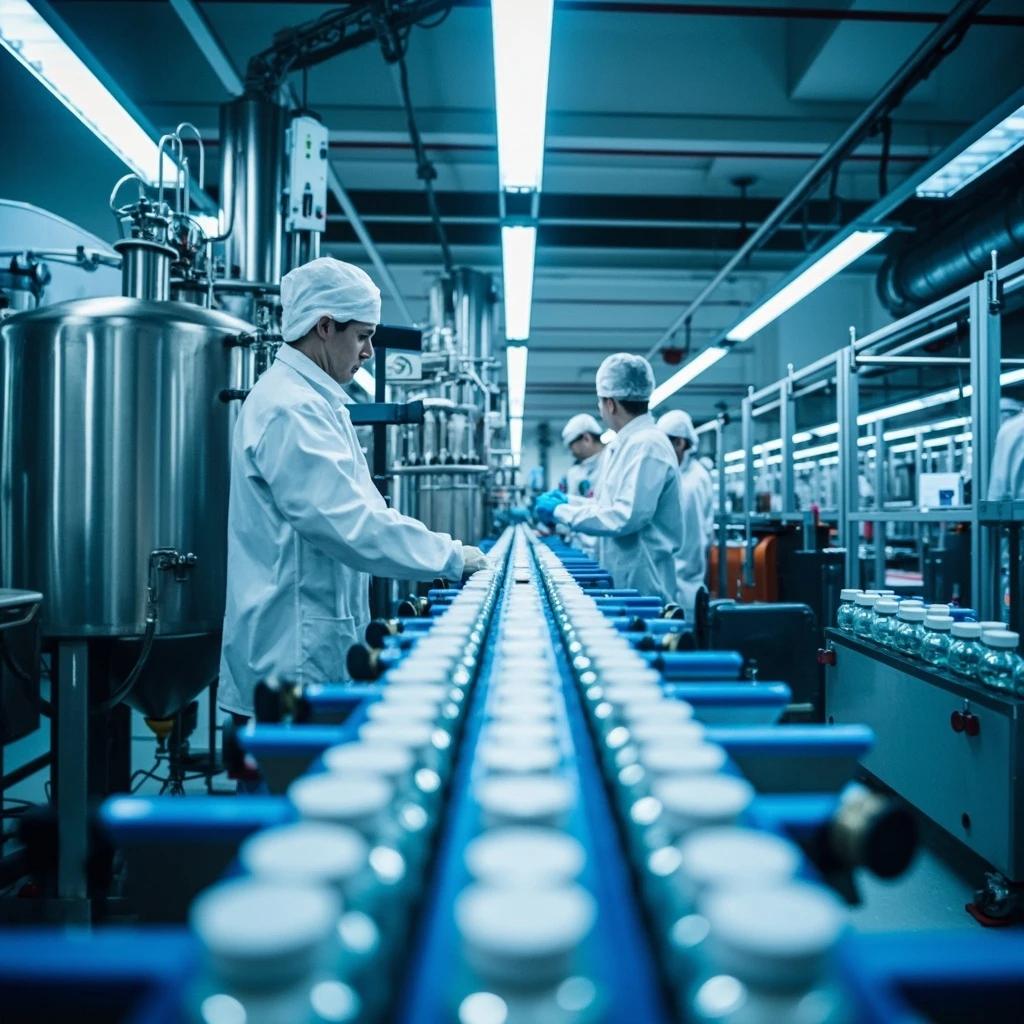
我们的排名基于数据,而非观点。VerityRank采用严格的多维度评估框架,专门针对生物制药制造业设计。我们在四个同等权重的支柱上评估每家制造商:生产规模与产能(25%)、技术集成(25%)、供应链覆盖与韧性(25%)以及法规合规与可持续性(25%)。
生产规模与产能通过自营制造设施总数、年产量(以剂量和升计)、制造基础设施资本支出以及从原材料采购到成品剂量包装的垂直整合程度来衡量。例如,辉瑞在全球运营超过30个自有制造基地,其卡拉马祖工厂每年单独生产1200公吨原料药,而诺和诺德运营16个战略生产基地,雇佣超过24,000名制造人员。
技术集成评估对复杂生物制剂制造平台的掌握程度,包括哺乳动物细胞培养(CHO和HEK293系统)、微生物发酵、mRNA-脂质纳米颗粒封装、病毒载体生产、通过科恩冷乙醇法进行的血浆分离以及无菌灌装。公司因部署人工智能驱动的过程分析技术(PAT)、数字孪生模拟和连续制造系统而获得更高分数,这些技术可降低批次失败率并提高产量一致性。
供应链覆盖与韧性考虑制造基地在监管辖区内的地理分布、能够维持2-8°C和-70°C温带的冷链物流基础设施、一级供应商网络深度以及在中断期间展现的供应连续性。例如,GSK在70个国家开展业务,拥有超过18,000家一级供应商,每天交付超过100万剂疫苗。近岸外包策略和区域制造冗余被给予正面权重。
法规合规与可持续性审查在FDA(21 CFR 210/211)、EMA(EudraLex第4卷)和NMPA辖区内的GMP合规记录。我们审查成功的监管检查次数、警告信历史和产品召回记录。环境标准包括可再生能源采用率、制药废水管理系统(赛诺菲已承诺到2025年底实现100%现场废水监测)以及碳中和路线图。罗氏在2025年实现了所有生产基地100%可持续电力。
排除标准:我们严格排除纯CDMO(Catalent、Lonza、药明生物)以及不拥有重要自营制造设施的无工厂制药公司。我们的排名公司必须展示大量自有的生物制剂和疫苗生产基础设施。
Our rankings are built on data, not opinions. VerityRank employs a rigorous, multi-dimensional evaluation framework specifically designed for the biopharmaceutical manufacturing sector. We assess each manufacturer across four equally weighted pillars: Production Scale & Capacity (25%), Technological Integration (25%), Supply Chain Reach & Resilience (25%), and Regulatory Compliance & Sustainability (25%).
Production Scale & Capacity is measured through total self-operated manufacturing facilities, annual production throughput in doses and liters, capital expenditure on manufacturing infrastructure, and the degree of vertical integration from raw material sourcing to finished dose packaging. For example, Pfizer operates over 30 self-owned manufacturing sites globally with its Kalamazoo facility alone producing 1,200 metric tons of API annually, while Novo Nordisk operates 16 strategic production bases employing over 24,000 manufacturing personnel.
Technological Integration evaluates mastery of complex biologics manufacturing platforms including mammalian cell culture (CHO and HEK293 systems), microbial fermentation, mRNA-lipid nanoparticle encapsulation, viral vector production, plasma fractionation via Cohn cold ethanol methodology, and aseptic sterile fill-finish. Companies receive higher scores for deploying AI-driven process analytical technology (PAT), digital twin simulations, and continuous manufacturing systems that reduce batch failure rates and improve yield consistency.
Supply Chain Reach & Resilience considers geographic distribution of manufacturing sites across regulatory jurisdictions, cold-chain logistics infrastructure capable of maintaining 2-8°C and -70°C temperature bands, Tier-1 supplier network depth, and demonstrated supply continuity during disruptions. GSK, for instance, maintains operations in 70 countries with over 18,000 Tier-1 suppliers and delivers over 1 million vaccine doses daily. Nearshoring strategies and regional manufacturing redundancy are weighted positively.
Regulatory Compliance & Sustainability examines GMP compliance track records across FDA (21 CFR 210/211), EMA (EudraLex Vol. 4), and NMPA jurisdictions. We review successful regulatory inspection counts, warning letter histories, and product recall records. Environmental criteria include renewable energy adoption rates, pharmaceutical wastewater management systems (Sanofi has committed to 100% site-level wastewater monitoring by end-2025), and carbon neutrality roadmaps. Roche achieved 100% sustainable electricity across all production sites in 2025.
Exclusion Criteria: We strictly exclude pure-play CDMOs (Catalent, Lonza, WuXi Biologics) and fabless pharmaceutical companies that do not own significant self-operated manufacturing facilities. Our ranked companies must demonstrate substantial, self-owned biologics and vaccine production infrastructure.
顶级生物制剂和疫苗制造商通过五种基本制造能力脱颖而出,这些能力构成了这一资本密集型行业工业竞争力的基石。
1. 大规模哺乳动物细胞培养与生物反应器操作: 操作超过15,000升规模的不锈钢和一次性生物反应器的能力是单克隆抗体(mAb)生产的基础。默克公司的Keytruda生产依赖于其位于宾夕法尼亚州和北卡罗来纳州工厂的大型CHO细胞培养系统,并得到其在弗吉尼亚州埃尔克顿生物制剂卓越中心30亿美元投资的支持。艾伯维运营着一个广泛的全球生物制剂平台,在其位于美国、波多黎各、爱尔兰和新加坡的工厂为每年超过5000万患者生产Skyrizi和Rinvoq。
2. 无菌灌装与冻干: 将原料药转化为即用型无菌注射剂形式需要ISO 5级洁净室环境和先进的隔离器技术。GLP-1生产热潮暴露了这一能力的关键瓶颈——诺和诺德以110亿美元收购Catalent的三个无菌灌装工厂直接解决了这一产能缺口。辉瑞的卡拉马祖工厂每年为超过1.4亿药物单位进行无菌灌装,处理复杂的液体生物制剂配方。
3. mRNA与脂质纳米颗粒(LNP)封装: 新冠疫情后,mRNA平台技术已成为一种永久性的制造模式。这需要对脂质纳米颗粒形成、封装效率(目标>90%)以及-70°C的低温储存能力进行精确控制。辉瑞及其合作伙伴BioNTech拥有专用的mRNA生产套件,具备快速切换能力,而赛诺菲在其法国和美国工厂大力投资了mRNA制造平台。
4. 血浆分离与色谱纯化: 血液制品生产——由CSL Behring和中国生物制药的天坛生物主导——需要大规模科恩冷乙醇分离和先进的色谱纯化。CSL在伊利诺伊州、澳大利亚和瑞士运营着超级加工厂,处理来自数百个采集中心的血浆。中国生物制药的天坛生物在2025年通过85个许可血浆站收集了2,801吨血浆,代表了中国最大的血浆网络。
5. 佐剂配方与疫苗偶联: 现代疫苗越来越依赖于专有佐剂系统(例如,GSK用于Shingrix的AS01佐剂)以及将多糖与载体蛋白连接的偶联化学。GSK的Shingrix在2025年产生了36亿英镑的收入,这得益于受大量商业秘密保护的复杂佐剂制造。赛诺菲的全球流感疫苗网络在专门的鸡胚、细胞和重组生产平台上每年生产13亿剂疫苗。
Top-tier biologics and vaccine manufacturers distinguish themselves through five essential manufacturing capabilities that form the bedrock of industrial competitiveness in this capital-intensive sector.
1. Large-Scale Mammalian Cell Culture & Bioreactor Operations: The ability to operate stainless steel and single-use bioreactors at scales exceeding 15,000 liters is fundamental to monoclonal antibody (mAb) production. Merck & Co.'s Keytruda manufacturing relies on massive CHO cell culture systems at its Pennsylvania and North Carolina facilities, supported by a $3 billion investment in the Elkton, Virginia biologics center of excellence. AbbVie operates an extensive global biologics platform producing Skyrizi and Rinvoq for over 50 million patients annually across facilities in the U.S., Puerto Rico, Ireland, and Singapore.
2. Aseptic Sterile Fill-Finish & Lyophilization: Converting bulk drug substance into ready-to-administer sterile injectable formats requires ISO Class 5 cleanroom environments and advanced isolator technology. The GLP-1 manufacturing boom has exposed critical bottlenecks in this capability — Novo Nordisk's $11 billion acquisition of Catalent's three sterile fill-finish facilities directly addressed this capacity gap. Pfizer's Kalamazoo facility alone performs sterile fill-finish for over 140 million drug units annually, handling complex liquid biologic formulations.
3. mRNA & Lipid Nanoparticle (LNP) Encapsulation: Post-COVID, mRNA platform technology has become a permanent manufacturing modality. This requires precise control over lipid nanoparticle formation, encapsulation efficiency (>90% target), and cryogenic storage capabilities at -70°C. Pfizer and its partner BioNTech maintain dedicated mRNA suites with rapid changeover capability, while Sanofi has invested heavily in mRNA manufacturing platforms at its French and U.S. facilities.
4. Plasma Fractionation & Chromatographic Purification: Blood product manufacturing — dominated by CSL Behring and CNBG's Tiantan Biological — requires massive-scale Cohn cold ethanol fractionation and advanced chromatographic purification. CSL operates super-processing plants in Illinois, Australia, and Switzerland processing plasma from hundreds of collection centers. CNBG's Tiantan Biological collected 2,801 tons of plasma in 2025 through 85 licensed stations, representing China's largest plasma network.
5. Adjuvant Formulation & Vaccine Conjugation: Modern vaccines increasingly depend on proprietary adjuvant systems (e.g., GSK's AS01 adjuvant for Shingrix) and conjugation chemistry linking polysaccharides to carrier proteins. GSK's Shingrix generated £3.6 billion in 2025 revenue, driven by complex adjuvant manufacturing that is protected by substantial trade secrets. Sanofi's global influenza vaccine network produces 1.3 billion doses annually across dedicated egg-based, cell-based, and recombinant production platforms.
生物制剂和疫苗制造中的质量控制是资源最密集的运营活动,在领先设施中消耗高达70%的总生产时间。与小分子药物不同,小分子药物的化学纯度可以通过直接的分析方法验证,而生物制剂需要一套精心设计的多层次质量保证架构,涵盖原材料鉴定、过程监控、放行测试和上市后监测。
1. 原材料与供应商鉴定:顶级制造商实施严格的供应商审计计划,涵盖化学品、生物制品和一次性系统供应商。GSK管理着超过18,000家一级供应商,并签订了书面质量协议和定期现场审计。细胞库鉴定——包括遗传稳定性测试、外来因子筛查和延长细胞培养评估——在任何生产活动开始前都是强制性的。培养基和缓冲液成分需进行鉴别测试、生物负载评估和内毒素定量(肠外产品接受标准:<0.25 EU/mL)。
2. 环境监测与洁净室控制:生物制剂制造在严格分级的洁净室环境(ISO 5至ISO 8)中进行。根据FDA 21 CFR 211.42和EU GMP附录1的要求,进行连续活性和非活性颗粒监测、压差级联验证、温度和湿度记录以及HEPA过滤器完整性测试。超出警戒限的公司会在CAPA(纠正和预防措施)框架下启动正式偏差调查。辉瑞和罗氏在所有生产车间维护实时环境监测仪表板,并带有自动超限警报。
3. 过程控制与过程分析技术(PAT):现代生物制剂设施部署拉曼光谱、近红外(NIR)分析和多角度光散射(MALS)用于实时监测关键质量属性(CQA)。生物反应器参数——溶解氧、pH、温度、代谢物浓度——根据验证的设计空间进行持续跟踪。礼来的下一代制造设施采用人工智能驱动的数字孪生模拟,预测批次结果并自动调整过程参数以维持CQA目标,预计将偏差率降低30-40%。
4. 放行测试与稳定性计划:每个商业批次都经过全面的放行测试组合,包括效力(基于细胞的生物测定或ELISA)、纯度(SEC-HPLC、CE-SDS)、鉴别(肽图、IEF)、安全性(无菌、内毒素、支原体)以及产品特定属性(糖基化谱、电荷变体、聚集)。符合ICH Q5C要求的稳定性计划在长期(5°C ± 3°C)、加速(25°C ± 2°C)和应力条件下监测产品质量。默沙东为其Keytruda和Gardasil产品系列维护稳定性培养箱,同时监测数千个批次。
5. 监管检查与药物警戒系统:顶级制造商维护专门的监管情报团队,跟踪FDA、EMA、PMDA和NMPA不断变化的指南。赛诺菲在2025年成功通过了所有39个制造基地的监管检查。采用人工智能驱动的信号检测算法的上市后药物警戒系统筛选不良事件数据库,以发现与制造相关的质量信号。CSL Behring运营着一个全球药物警戒网络,监测其免疫球蛋白和白蛋白产品,这些产品在超过100个国家用于数百万患者。
6. 冷链完整性与分销质量:疫苗分销需要经过验证的冷链系统,维持精确的温度范围——大多数疫苗为2-8°C,某些病毒疫苗为-20°C,mRNA产品为-70°C。每批货物都配备带有GPS跟踪的连续温度监测设备。赛诺菲在2025-2026季节前通过将制造基地翻倍和生物反应器产能增加三倍,同时保持完整的冷链完整性,向全球运送了Beyfortus(RSV抗体)剂量。偏差事件会触发立即隔离和根本原因调查。
Quality control in biologics and vaccine manufacturing represents the single most resource-intensive operational activity, consuming up to 70% of total production time at leading facilities. Unlike small-molecule pharmaceuticals where chemical purity can be verified through straightforward analytical methods, biologics require an elaborate, multi-tiered quality assurance architecture spanning raw material qualification, in-process monitoring, release testing, and post-market surveillance.
1. Raw Material & Supplier Qualification: Top manufacturers implement rigorous supplier auditing programs covering chemical, biological, and single-use system vendors. GSK manages over 18,000 Tier-1 suppliers with documented quality agreements and periodic on-site audits. Cell bank characterization — including genetic stability testing, adventitious agent screening, and extended cell culture evaluation — is mandatory before any production campaign begins. Media and buffer components undergo identity testing, bioburden assessment, and endotoxin quantification (acceptance criterion: <0.25 EU/mL for parenteral products).
2. Environmental Monitoring & Cleanroom Control: Biologics manufacturing occurs within strictly classified cleanroom environments (ISO 5 through ISO 8). Continuous viable and non-viable particulate monitoring, differential pressure cascade verification, temperature and humidity logging, and HEPA filter integrity testing are performed per FDA 21 CFR 211.42 and EU GMP Annex 1 requirements. Companies exceeding alert limits trigger formal deviation investigations under CAPA (Corrective and Preventive Action) frameworks. Pfizer and Roche maintain real-time environmental monitoring dashboards with automated excursion alerts across all production suites.
3. In-Process Control & Process Analytical Technology (PAT): Modern biologics facilities deploy Raman spectroscopy, near-infrared (NIR) analysis, and multi-angle light scattering (MALS) for real-time monitoring of critical quality attributes (CQAs). Bioreactor parameters — dissolved oxygen, pH, temperature, metabolite concentrations — are continuously tracked against validated design spaces. Eli Lilly's next-generation manufacturing facilities incorporate AI-driven digital twin simulations that predict batch outcomes and automatically adjust process parameters to maintain CQA targets, reducing deviation rates by an estimated 30-40%.
4. Release Testing & Stability Programs: Every commercial batch undergoes a comprehensive release testing panel including potency (cell-based bioassay or ELISA), purity (SEC-HPLC, CE-SDS), identity (peptide mapping, IEF), safety (sterility, endotoxin, mycoplasma), and product-specific attributes (glycan profile, charge variants, aggregation). ICH Q5C-compliant stability programs monitor product quality under long-term (5°C ± 3°C), accelerated (25°C ± 2°C), and stress conditions. Merck & Co. maintains stability chambers monitoring thousands of batches simultaneously for its Keytruda and Gardasil product families.
5. Regulatory Inspection & Pharmacovigilance Systems: Top manufacturers maintain dedicated regulatory intelligence teams tracking evolving guidance from FDA, EMA, PMDA, and NMPA. Sanofi underwent successful regulatory inspections across all 39 manufacturing sites in 2025. Post-market pharmacovigilance systems employing AI-driven signal detection algorithms screen adverse event databases for manufacturing-related quality signals. CSL Behring operates a global pharmacovigilance network monitoring its immunoglobulin and albumin products administered to millions of patients across more than 100 countries.
6. Cold Chain Integrity & Distribution Quality: Vaccine distribution requires validated cold chain systems maintaining precise temperature bands — 2-8°C for most vaccines, -20°C for certain viral vaccines, and -70°C for mRNA products. Continuous temperature monitoring devices with GPS tracking accompany every shipment. Sanofi shipped Beyfortus (RSV antibody) doses globally ahead of the 2025-2026 season by doubling manufacturing sites and tripling bioreactor capacity while maintaining full cold chain integrity. Deviation events trigger immediate quarantine and root cause investigation.
2025-2026年标志着生物制剂和疫苗制造的一个决定性转折点,五大结构性趋势正在从根本上改变行业投资、运营和保障生产能力的方式。
1. GLP-1制造产能紧张:对GLP-1受体激动剂的爆炸性需求——诺和诺德的司美格鲁肽系列在2025年产生346亿美元,礼来的替尔泊肽组合推动45%的收入增长至652亿美元——造成了制药史上最严重的无菌灌装产能短缺。这引发了前所未有的资本部署:诺和诺德的母公司以110亿美元收购了Catalent的无菌制造基地,而礼来自2020年以来已向美国制造投入超过500亿美元。其下游效应是对非GLP-1产品的CDMO产能大规模挤出,迫使竞争对手加速自身内部制造建设。
2. 回流与战略制造自主:疫情后的供应链脆弱性和不断升级的地缘政治紧张局势推动了制药史上最大的制造回流运动。GSK承诺在五年内投入300亿美元用于美国制造和研发。罗氏承诺500亿美元用于美国国内产能。艾伯维启动了超过100亿美元的资本支出计划,将API合成和生物制剂制造从欧洲和亚洲转移到伊利诺伊州和马萨诸塞州的设施。默沙东在弗吉尼亚州、特拉华州和北卡罗来纳州分配了超过120亿美元用于新的生物制剂中心。这一趋势代表了对主导制药供应链三十年的全球化模式的根本性拒绝。
3. 人工智能与工业4.0转型:先进制造技术正在加速部署。GSK在宾夕法尼亚州的12亿美元灵活生物制剂工厂将完全由人工智能驱动,利用数字孪生技术在物理执行前模拟和优化每个生产批次。礼来在得克萨斯州和弗吉尼亚州的制造园区采用了基于机器学习的预测性维护系统、自动视觉检测和机器人无菌灌装线,将人工干预减少80%以上。罗氏已在其全球制造网络中实现100%可持续电力,同时部署人工智能进行实时质量预测,降低批次拒收率。
4. CDMO向自建产能的转变:诺和诺德与Catalent的交易代表了一种范式转变,对整个生物制药生态系统具有深远影响。此前,即使是最大的制药公司也依赖CDMO来获得应急产能和专业技术。一家制药公司收购顶级CDMO表明自建产能现在是一种竞争武器。这创造了一个分化的市场:大型制药公司正在建立堡垒般的内部制造网络,而较小的生物技术公司越来越难以获得CDMO的可用产能。这一趋势加速了整合,并提高了依赖外部制造合作伙伴的创新初创企业的进入门槛。
5. 中国市场重组与带量采购:作为全球第二大制药市场,中国正在经历深刻的监管和定价转型,直接影响全球制造战略。国家带量采购(VBP)项目和激进的NRDL价格谈判已将关键治疗领域的生物制剂利润率压缩了25-50%。默沙东在2025年下半年暂停了Gardasil对中国的发货,以解决渠道库存积压问题,导致该季度中国收入为零。罗氏诊断部门中国收入下降24%。相反,诺和诺德通过战略定价在中国保持了83.1%的GLP-1市场份额。中国市场正在从高利润增长引擎转变为以量驱动、利润受限的运营环境,需要根本不同的制造成本结构。
The 2025-2026 period marks a decisive inflection point in biologics and vaccine manufacturing, with five structural trends fundamentally altering how the industry invests in, operates, and secures its production capacity.
1. The GLP-1 Manufacturing Capacity Crunch: The explosive demand for GLP-1 receptor agonists — Novo Nordisk's semaglutide franchise generating $34.6 billion and Eli Lilly's tirzepatide portfolio driving 45% revenue growth to $65.2 billion in 2025 — has created the most severe sterile fill-finish capacity shortage in pharmaceutical history. This has triggered unprecedented capital deployment: Novo Nordisk's parent company executed an $11 billion acquisition of Catalent's sterile manufacturing sites, while Eli Lilly committed over $50 billion to U.S. manufacturing since 2020. The downstream effect has been a massive crowding-out of CDMO capacity for non-GLP-1 products, forcing competitors to accelerate their own internal manufacturing buildouts.
2. Reshoring & Strategic Manufacturing Autonomy: Post-pandemic supply chain vulnerabilities and escalating geopolitical tensions have driven the largest manufacturing reshoring movement in pharmaceutical history. GSK pledged $30 billion for U.S. manufacturing and R&D over five years. Roche committed $50 billion for domestic U.S. production capacity. AbbVie launched over $10 billion in capital expenditure programs to relocate API synthesis and biologics manufacturing from Europe and Asia to Illinois and Massachusetts facilities. Merck allocated over $12 billion across Virginia, Delaware, and North Carolina for new biologics centers. The trend represents a fundamental rejection of the globalization model that dominated pharmaceutical supply chains for three decades.
3. AI & Industry 4.0 Transformation: Advanced manufacturing technologies are being deployed at an accelerating pace. GSK's $1.2 billion flexible biologics facility in Pennsylvania will be entirely AI-driven, utilizing digital twin technology to simulate and optimize every production run before physical execution. Eli Lilly's Texas and Virginia manufacturing campuses incorporate machine learning-based predictive maintenance systems, automated visual inspection, and robotic aseptic filling lines that reduce human intervention by over 80%. Roche has achieved 100% sustainable electricity across its global manufacturing network while deploying AI for real-time quality prediction, reducing batch rejection rates.
4. The CDMO-to-Captive Capacity Pivot: The Novo Nordisk-Catalent transaction represents a paradigm shift with profound implications for the entire biopharmaceutical ecosystem. Previously, even the largest pharmaceutical companies relied on CDMOs for surge capacity and specialized technologies. The acquisition of a top-tier CDMO by a drug manufacturer signals that captive capacity is now a competitive weapon. This has created a bifurcated market: mega-cap pharma companies building fortress-like internal manufacturing networks, and smaller biotechs increasingly squeezed out of available CDMO slots. The trend accelerates consolidation and raises barriers to entry for innovative startups that depend on external manufacturing partners.
5. China Market Restructuring & Volume-Based Procurement: China, as the world's second-largest pharmaceutical market, is undergoing a profound regulatory and pricing transformation that directly impacts global manufacturing strategies. National Volume-Based Procurement (VBP) programs and aggressive NRDL price negotiations have compressed biologics margins by 25-50% in key therapeutic categories. Merck suspended Gardasil shipments to China in H2 2025 to address channel inventory accumulation, resulting in zero China revenue for the quarter. Roche's diagnostics division saw a 24% China revenue decline. Conversely, Novo Nordisk maintained an 83.1% GLP-1 market share in China through strategic pricing. The Chinese market is transitioning from a high-margin growth engine to a volume-driven, margin-constrained operating environment requiring fundamentally different manufacturing cost structures.
VerityRank每半年更新一次其生物制品和疫苗制造商排名,主要修订在Q1(1月至2月)发布,紧随上一财年全年财务报告的发布,并在Q3(7月至8月)进行中期更新,纳入半年度业绩数据和重大制造产能公告。
全年更新(Q1):主要排名修订每年1月至2月进行,在全球最大的生物制药制造商发布其经审计的年度报告和向SEC提交的10-K文件之后。此次更新纳入了最全面的数据集:全年收入数据(包括美国、欧洲和中国市场的区域细分)、详细的资本支出报告、制造设施扩建更新、监管检查结果和可持续发展绩效指标。Q1更新通常捕捉到重大战略转变——例如,2025年全年周期记录了诺和诺德对Catalent的收购、礼来500亿美元的美国制造承诺,以及默沙东在中国HPV疫苗供应链的重组。所有四个评估维度(生产规模、技术集成、供应链覆盖和法规合规)均使用最新的审计数据进行全面重新计算。
中期更新(Q3):在7月至8月进行的年中更新整合了H1财务披露、新设施奠基和启用(例如葛兰素史克在宾夕法尼亚州的人工智能驱动灵活工厂和罗氏在北卡罗来纳州的肽合成园区)、监管里程碑成就(FDA/EMA批准、WHO预认证)以及影响制造能力的重大并购交易。虽然Q3更新通常不会引发重大排名变动,但它捕捉了势头变化——一家公司在1月至6月期间已为多个十亿美元级设施奠基,其生产规模得分可能会在下一个全年周期之前增加。
实时监控与触发式修订:在预定更新之间,VerityRank持续监控可能触发中期排名调整的重大事件。这些包括:(1)交易价值超过10亿美元、转移重要制造资产的并购;(2)影响主要生产设施的FDA警告信或同意令;(3)影响全球产品供应的灾难性供应中断(自然灾害、污染事件);以及(4)破产或自愿退出市场。当重大事件发生时,受影响公司的分数将在30天内重新计算,排名相应更新并附上注明日期的修订通知。
历史数据与趋势分析:所有排名数据均保存在VerityRank的历史数据库中,支持多年趋势分析。订阅者可以追踪制造商在2023-2026财年间的排名变化,观察产能投资、监管行动和市场变化的影响。对于本版生物制品和疫苗制造商排名的首版,我们使用2025财年数据对公司进行了基准测试,并在可用时提供了2023-2024年的比较背景。未来的更新周期将丰富这一纵向数据集,并实现更复杂的同比绩效比较。
方法论透明度:VerityRank在每次排名更新时发布详细的方法说明,记录任何权重调整、纳入的新数据源或方法改进。我们鼓励读者阅读上面的完整方法论部分和我们的数据来源披露,以全面了解我们的分析框架。公司欢迎通过我们的验证门户提交补充制造数据;所有提交内容均由我们的研究团队根据独立的佐证来源进行审查,然后才能进行任何分数调整。
VerityRank updates its Biological Products & Vaccines Manufacturer Rankings on a semi-annual basis, with major revisions published in Q1 (January-February) following the release of full-year financial reports from the preceding fiscal year, and interim updates in Q3 (July-August) incorporating half-year performance data and significant manufacturing capacity announcements.
Full-Year Update (Q1): The primary ranking revision occurs each January-February after the world's largest biopharmaceutical manufacturers publish their audited annual reports and 10-K filings with the SEC. This update incorporates the most comprehensive dataset available: full-year revenue figures (including regional breakdowns for U.S., Europe, and China markets), detailed capital expenditure reports, manufacturing facility expansion updates, regulatory inspection outcomes, and sustainability performance metrics. The Q1 update typically captures major strategic shifts — for example, the 2025 full-year cycle documented Novo Nordisk's Catalent acquisition, Eli Lilly's $50 billion U.S. manufacturing commitment, and Merck's HPV vaccine supply chain restructuring in China. All four evaluation dimensions (Production Scale, Technological Integration, Supply Chain Reach, and Regulatory Compliance) are comprehensively recalculated using the latest audited data.
Interim Update (Q3): A mid-year refresh in July-August integrates H1 financial disclosures, new facility groundbreakings and inaugurations (such as GSK's AI-driven Pennsylvania flex factory and Roche's North Carolina peptide synthesis campus), regulatory milestone achievements (FDA/EMA approvals, WHO prequalification), and significant M&A transactions affecting manufacturing capacity. While the Q3 update does not typically trigger major ranking reshuffles, it captures momentum shifts — a company that has broken ground on multiple billion-dollar facilities between January and June may see its Production Scale score increase ahead of the next full-year cycle.
Real-Time Monitoring & Trigger-Based Revisions: Between scheduled updates, VerityRank maintains continuous monitoring of material events that could warrant interim ranking adjustments. These include: (1) mergers and acquisitions exceeding $1 billion in transaction value that transfer significant manufacturing assets; (2) FDA Warning Letters or consent decrees affecting major production facilities; (3) catastrophic supply disruptions (natural disasters, contamination events) impacting global product availability; and (4) bankruptcies or voluntary market withdrawals. When a material event occurs, affected company scores are recalculated within 30 days and rankings updated accordingly with a dated revision notice.
Historical Data & Trend Analysis: All ranking data is preserved in VerityRank's historical database, enabling multi-year trend analysis. Subscribers can track how a manufacturer's position has evolved across fiscal years 2023-2026, observing the impact of capacity investments, regulatory actions, and market shifts. For this inaugural edition of the Biological Products & Vaccines Manufacturers Ranking, we have benchmarked companies using fiscal year 2025 data with comparative context from 2023-2024 where available. Future update cycles will enrich this longitudinal dataset and enable more sophisticated year-over-year performance comparisons.
Methodology Transparency: VerityRank publishes detailed methodology notes with each ranking update, documenting any weight adjustments, new data sources incorporated, or methodological refinements. We encourage readers to review the complete methodology section above and our Data Sources disclosure for a full understanding of our analytical framework. Companies are welcome to submit supplementary manufacturing data through our verification portal; all submissions are reviewed by our research team against independent corroborating sources before any score adjustments are made.