我们的排名基于数据,而非观点。
该排名采用严格的四维方法论评估全球医疗耗材和诊断试剂制造商与供应商。综合制造商评分(0-100分)由以下加权标准计算得出:
1. 全球营收规模(30%):以美元计的年总收入,源自最新经审计的财务报告(2025财年),并重点关注医疗耗材和诊断试剂制造相关的营收。相关营收超过100亿美元的企业获得最高分。
2. 产能与供应链韧性(25%):医疗耗材和诊断试剂的年产量(以件数或交付的测试次数计)、制造设施数量、生产基地的地理多元化程度,以及在全球中断期间展现的供应链连续性。
3. 创新与技术领导力(25%):研发支出占营收的百分比、诊断和耗材技术领域的有效专利数量、新产品推出速度、自动化部署(工业4.0、AGV、机器人技术),以及对全球健康标准和监管框架的贡献。
4. 质量与法规合规性(20%):遵守FDA、CE、ISO 13485和WHO预认证标准;产品召回或警告信的历史记录;以及专业制造环境(洁净室、无菌、GMP合规设施)的认证。
数据来源与方法论:我们的排名源自年度报告、SEC文件、FDA数据库、行业协会数据(AdvaMed、MedTech Europe),以及来自Grand View Research和Mordor Intelligence的专有市场情报。每个制造商的数据均至少与三个权威来源进行独立验证。
免责声明:VerityRank的排名旨在作为采购、基准测试和投资决策的参考工具。排名反映了截至最近财年的公开数据。我们建议直接咨询供应商和监管机构以获取最新的合规和定价信息。
Our rankings are built on data, not opinions.
This ranking evaluates global Medical Consumables and Diagnostic Reagents manufacturers and suppliers using a rigorous four-dimensional methodology. The Composite Manufacturer Score (0-100) is calculated from the following weighted criteria:
1. Global Revenue Scale (30%): Annual total revenue in USD, derived from the most recent audited financial reports (FY 2025) and focused specifically on revenue attributable to medical consumables and diagnostic reagents manufacturing. Companies exceeding $10 billion in relevant revenue receive top marks.
2. Production Capacity & Supply Chain Resilience (25%): Annual manufacturing output of medical consumables and diagnostic reagents (in units or millions of tests delivered), number of manufacturing facilities, geographic diversification of production sites, and demonstrated supply chain continuity during global disruptions.
3. Innovation & Technological Leadership (25%): R&D expenditure as a percentage of revenue, number of active patents in diagnostic and consumable technologies, pace of new product introductions, deployment of automation (Industry 4.0, AGV, robotics), and contributions to global health standards and regulatory frameworks.
4. Quality & Regulatory Compliance (20%): Adherence to FDA, CE, ISO 13485, and WHO prequalification standards; history of product recalls or warning letters; and certifications for specialized manufacturing environments (cleanroom, sterile, GMP-compliant facilities).
Data Sources & Methodology: Our rankings are derived from annual reports, SEC filings, FDA databases, industry association data (AdvaMed, MedTech Europe), and proprietary market intelligence from Grand View Research and Mordor Intelligence. Each manufacturer's data is independently verified against at least three authoritative sources.
Disclaimer: VerityRank's rankings are intended as a reference tool for procurement, benchmarking, and investment decisions. Rankings reflect publicly available data as of the latest fiscal year. We recommend consulting directly with suppliers and regulatory bodies for the most current compliance and pricing information.
顶级制造商的定义并非单一指标,而是在五个相互关联的维度上达到精通。
首先是无与伦比的生产规模和吞吐量——能够持续交付数十亿单位产品,且缺陷率低于百分之一。BD(碧迪)就是例证,其年产量超过340亿件医疗器械,包括注射器、导管和采血管,在全球50个生产基地完成。罗氏诊断同样每年处理超过310亿次实验室检测,利用全自动试剂灌装线,在ISO 8级洁净室条件下全天候运行。
其次是将监管卓越作为竞争优势。领先制造商同时持有FDA 21 CFR Part 820、EU MDR 2017/745、ISO 13485:2016和WHO预认证等认证——通常拥有50多个不同国家的注册。贝朗在马来西亚槟城的工业4.0工厂,将自动导引车与实时环境监测相结合,在保持A/B级洁净室无菌状态的同时,每年生产超过8亿件静脉导管和输液器。
第三是产品组合的广度和临床相关性。顶级制造商覆盖从低风险耗材(纱布、手套、注射器)到高复杂性诊断试剂(PCR预混液、免疫检测试剂盒、血液学质控品)的全谱系。西门子医疗和雅培展示了这种广度,提供集成实验室自动化系统以及可在竞争平台上运行的试剂——这种战略互操作性是医院优先考虑的。
第四是全球分销和冷链掌控。赛默飞世尔科技运营着行业最大的冷链物流网络,覆盖180多个国家,拥有经过验证的温控包装,能够在数周跨洋运输中为生物制品维持-80°C,为常规诊断试剂维持-20°C。结合在孟菲斯、新加坡和法兰克福的区域分销中心,确保全球范围内重症监护耗材的48小时紧急补货。
最后,持续的研发投入将领导者与追随者区分开来。顶级制造商每年将相关部门收入的6-12%投入研发。百特每年6.5亿美元的研发预算用于资助下一代肾脏耗材和带有嵌入式传感器的智能输液泵,而生物梅里埃将超过13%的收入用于诊断研发——推动了快速病原体识别能力,将临床微生物学周转时间从数天缩短到数小时。
A top-tier manufacturer is defined not by a single metric but by mastery across five interconnected dimensions.
First is unmatched production scale and throughput — the ability to consistently deliver billions of units with sub-percent defect rates. BD (Becton, Dickinson) exemplifies this with an annual output exceeding 34 billion medical devices including syringes, catheters, and blood collection tubes across 50 manufacturing sites worldwide. Roche Diagnostics similarly processes over 31 billion laboratory tests annually, leveraging fully automated reagent filling lines that operate 24/7 under ISO Class 8 cleanroom conditions.
Second is regulatory excellence as a competitive advantage. Leading manufacturers maintain simultaneous certification across FDA 21 CFR Part 820, EU MDR 2017/745, ISO 13485:2016, and WHO prequalification — often holding 50+ distinct country registrations. B. Braun's Industry 4.0 factory in Penang, Malaysia, integrates automated guided vehicles (AGVs) with real-time environmental monitoring to maintain Grade A/B cleanroom sterility while producing over 800 million IV catheters and infusion sets per year.
Third is portfolio breadth and clinical relevance. Top-tier manufacturers cover the full spectrum from low-acuity consumables (gauze, gloves, syringes) to high-complexity diagnostic reagents (PCR master mixes, immunoassay kits, hematology controls). Siemens Healthineers and Abbott illustrate this breadth, offering integrated lab automation systems alongside reagents that run on competing platforms — a strategic interoperability that hospitals prioritize.
Fourth is global distribution and cold-chain mastery. Thermo Fisher Scientific operates the industry's largest cold-chain logistics network spanning 180+ countries with validated temperature-controlled packaging capable of maintaining -80°C for biologics and -20°C for routine diagnostic reagents during multi-week transoceanic shipments. Combined with regional distribution hubs in Memphis, Singapore, and Frankfurt, this ensures 48-hour emergency replenishment for critical care consumables worldwide.
Finally, sustained R&D investment separates leaders from followers. Top manufacturers invest 6-12% of relevant-division revenue in R&D annually. Baxter's $650 million annual R&D budget funds next-generation renal consumables and smart infusion pumps with embedded sensors, while bioMérieux dedicates over 13% of revenue to diagnostics R&D — driving rapid pathogen identification capabilities that transformed clinical microbiology turnaround from days to hours.
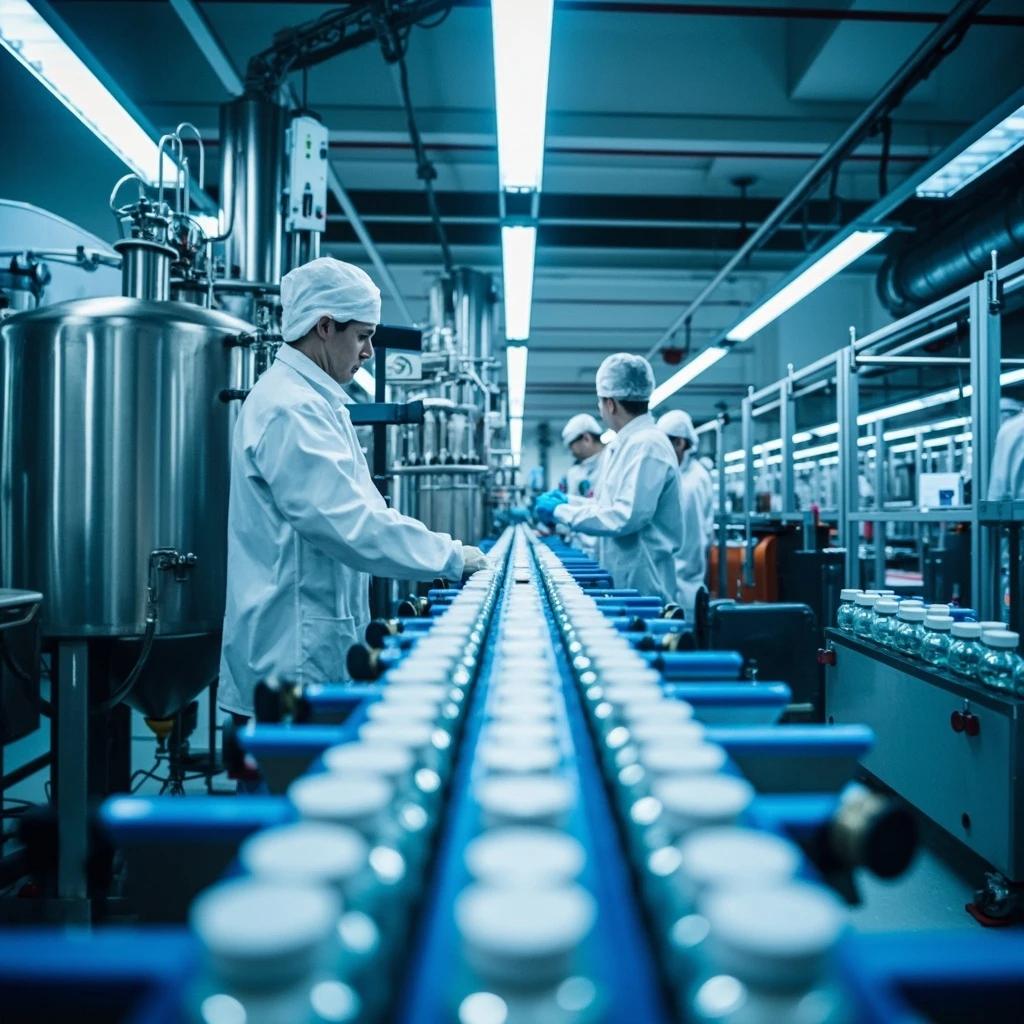
2025年的医疗耗材制造车间与十年前相比已大相径庭。
自动导引车(AGV)和自主移动机器人(AMR)现已成为无菌制造内部物流的支柱。贝朗在槟城的旗舰工厂被广泛认为是全球最先进的医疗器械工厂之一,部署了超过120辆AGV,可在洁净室区域之间自主运输原材料、在制品和成品静脉输液耗材——完全消除了A/B级环境中的人工物料搬运,并将污染风险降至接近零。这一工业4.0蓝图已成为全球新建耗材工厂的参考架构。
一次性使用系统(SUS)和一次性生物反应器代表了诊断试剂制造领域最具颠覆性的转变。传统不锈钢设备需要在批次之间进行大量清洁验证——这一过程消耗了总制造周期时间的30-40%。赛默飞和赛多利斯的一次性组件消除了交叉污染风险,将换产时间从几天缩短到几小时,并实现了灵活的多产品工厂,可在单个班次内切换试剂配方。全球一次性生物处理市场在2024年超过80亿美元,主要受诊断试剂和疫苗耗材需求驱动。
AI驱动的机器视觉和实时质量控制正在用100%在线检测取代统计抽样。BD在2022年至2025年间投资12亿美元用于下一代注射器生产线,集成了高光谱成像、激光测微和卷积神经网络,以实时检测亚可见颗粒、小于5微米的尺寸偏差和外观缺陷——生产线速度超过每分钟2000件。西门子医疗在其Atellica实验室自动化平台中应用了类似的AI模型,视觉系统以每小时800次测试的速度检查试剂盒完整性和条码可读性。
模块化洁净室建造和隔离器技术正在大幅降低设施建设成本。带有集成HVAC和HEPA过滤的预制模块化洁净室舱体使制造商能够在12周内部署ISO 7级和8级制造车间——而传统建造需要18-24个月。来自Optima Pharma和Groninger的封闭式灌装隔离器使得无菌耗材生产无需整个房间达到A级标准,节省了数百万的HVAC运营成本,同时保持同等的无菌保证水平(SAL 10⁻⁶)。
数字孪生和预测性维护完成了工业4.0转型。罗氏诊断在曼海姆和罗特克罗伊茨运营其试剂灌装和冻干生产线的数字副本,模拟设备磨损模式以在计划停机期间安排维护——实现了超过94%的整体设备效率(OEE),远高于高混合诊断耗材制造行业70-75%的平均水平。
The medical consumables manufacturing floor of 2025 bears little resemblance to its predecessor from a decade ago.
Automated Guided Vehicles (AGVs) and autonomous mobile robots (AMRs) are now the backbone of intralogistics in sterile manufacturing. B. Braun's Penang flagship facility, widely regarded as one of the most advanced medical device factories globally, deploys over 120 AGVs that autonomously transport raw materials, work-in-progress, and finished IV consumables between cleanroom zones — eliminating human material handling entirely within Grade A/B environments and reducing contamination risk to near-zero levels. This Industry 4.0 blueprint has become the reference architecture for new consumables plants worldwide.
Single-use systems (SUS) and disposable bioreactors represent the most disruptive shift in diagnostic reagent manufacturing. Traditional stainless-steel equipment required extensive cleaning validation between batches — a process consuming 30-40% of total manufacturing cycle time. Single-use assemblies from Thermo Fisher and Sartorius eliminate cross-contamination risk, reduce changeover from days to hours, and enable flexible multi-product facilities that can pivot between reagent formulations within a single shift. The global single-use bioprocessing market surpassed $8 billion in 2024, driven primarily by diagnostic reagent and vaccine consumable demand.
AI-driven machine vision and real-time quality control are replacing statistical sampling with 100% inline inspection. BD invested $1.2 billion between 2022 and 2025 in next-generation syringe manufacturing lines that integrate hyperspectral imaging, laser micrometry, and convolutional neural networks to detect sub-visible particles, dimensional deviations under 5 microns, and cosmetic defects in real time — at line speeds exceeding 2,000 units per minute. Siemens Healthineers applies similar AI models within its Atellica lab automation platforms, where vision systems inspect reagent cartridge integrity and barcode readability at 800 tests per hour.
Modular cleanroom construction and isolator technology are dramatically reducing facility build-out costs. Prefabricated modular cleanroom pods with integrated HVAC and HEPA filtration allow manufacturers to deploy ISO Class 7 and Class 8 manufacturing suites in under 12 weeks — down from 18-24 months for traditional construction. Closed-vial filling isolators from Optima Pharma and Groninger enable aseptic consumable production without full-room Grade A classification, saving millions in HVAC operating costs while maintaining equivalent sterility assurance levels (SAL 10⁻⁶).
Digital twins and predictive maintenance complete the Industry 4.0 transformation. Roche Diagnostics operates digital replicas of its reagent filling and lyophilization lines in Mannheim and Rotkreuz, simulating equipment wear patterns to schedule maintenance during planned downtime — achieving over 94% overall equipment effectiveness (OEE), well above the 70-75% industry average for high-mix diagnostic consumable manufacturing.
医疗耗材采购中的供应商评估已远远超越单价比较。
从认证与监管合规开始——这是不可商量的底线。核实每个供应商是否持有由公认公告机构(BSI、TÜV SÜD、SGS)颁发的现行ISO 13485:2016认证,这确认了其质量管理体系专门针对医疗器械制造。对于进入美国市场的产品,确认FDA机构注册以及适用的510(k)或PMA许可。对于欧洲采购,必须符合EU MDR 2017/745,并在新法规下具有有效的CE标志——注意许多旧的MDD证书已于2024-2025年到期,仍在过渡条款下运营的供应商需要谨慎尽职调查。
地理生产多元化是供应链韧性的指标,新冠疫情已将其永久提升为采购优先事项。评估供应商是否在至少两个大洲运营制造设施,且每个站点拥有独立的原材料采购链。像BD这样在内布拉斯加州、新加坡和匈牙利都有注射器制造的供应商,提供了单一设施竞争对手无法比拟的固有冗余。要求提供书面业务连续性计划,包括至少三个月的库存政策、关键原材料的双重来源协议以及经过验证的替代生产现场资格认证程序。
基于量的采购(VBP)准备对中国和亚洲的医疗系统越来越关键,但其原则在全球适用。评估供应商是否能承诺长期(3-5年)定价协议,包括年度价格透明度、量价折扣层级以及包含缺货罚则的供应保证。康宁生命科学和西氏医药包装已设定了VBP兼容定价模式的基准,为大批量机构买家将单位耗材成本降低了18-35%,同时保持超过99.5%的交货可靠性。
可持续性与环境合规应与成本和质量同等权重。医疗保健部门约占全球净排放量的4.4%,而耗材——尤其是一次性塑料——是主要贡献者。评估供应商在以下方面的表现:包装中可回收或生物基材料的百分比、单位产品能耗(每千件千瓦时)、有害废物减少计划,以及与欧盟绿色协议和科学碳目标倡议(SBTi)的一致性。雅培和贝朗已承诺到2030-2035年实现碳中和制造,并发布可公开验证的进展报告。
最后,进行结构化现场审计和背景调查。参观至少两个制造基地,审查最近三份FDA/公告机构检查报告(包括任何483表格意见或不符合项),并直接与三个采购量相当的现有医院或经销商客户交谈。特别关注供应商的投诉处理和不良事件报告流程——快速、透明的召回管理是成熟质量体系的最终考验。
Supplier evaluation in medical consumables procurement has evolved far beyond unit-price comparison.
Begin with certification and regulatory standing — the non-negotiable baseline. Verify that every supplier holds current ISO 13485:2016 certification from a recognized notified body (BSI, TÜV SÜD, SGS), which confirms a quality management system specific to medical device manufacturing. For products entering the US market, confirm FDA establishment registration and 510(k) or PMA clearance where applicable. For European procurement, EU MDR 2017/745 compliance with valid CE marking under the new regulation is mandatory — note that many legacy MDD certificates expired in 2024-2025, and suppliers still operating under transitional provisions warrant careful due diligence.
Geographic production diversification is a supply chain resilience indicator that the COVID-19 pandemic permanently elevated as a procurement priority. Evaluate whether a supplier operates manufacturing facilities across at least two continents, with independent raw material sourcing chains for each site. A supplier like BD with syringe manufacturing in Nebraska, Singapore, and Hungary offers inherent redundancy that a single-facility competitor cannot match. Ask for documented business continuity plans that include minimum three-month stockpile policies, dual-source agreements for critical raw materials, and validated alternate production site qualification procedures.
Volume-based procurement (VBP) readiness is increasingly critical for Chinese and Asian healthcare systems, but its principles apply globally. Assess whether suppliers can commit to long-term (3-5 year) pricing agreements with annual price transparency, volume discount tiers, and guaranteed supply commitments that include penalty clauses for stockouts. Corning Life Sciences and West Pharmaceutical Services have set benchmarks with VBP-compatible pricing models that reduced per-unit consumable costs by 18-35% for high-volume institutional buyers while maintaining delivery reliability above 99.5%.
Sustainability and environmental compliance should be weighted alongside cost and quality. The healthcare sector generates approximately 4.4% of global net emissions, and consumables — particularly single-use plastics — are a major contributor. Evaluate suppliers on: percentage of recyclable or bio-based content in packaging, energy intensity per unit produced (kWh per thousand units), hazardous waste reduction programs, and alignment with the EU Green Deal and Science Based Targets initiative (SBTi). Abbott and B. Braun have committed to carbon-neutral manufacturing by 2030-2035, with publicly verifiable progress reports.
Finally, conduct structured site audits and reference checks. Visit at least two manufacturing sites, review last three FDA/notified body inspection reports (including any Form 483 observations or non-conformities), and speak directly with three existing hospital or distributor customers of comparable procurement volume. Pay particular attention to the supplier's complaint handling and adverse event reporting processes — rapid, transparent recall management is the ultimate test of a mature quality system.
全球医疗耗材和诊断试剂制造集中在四个主要区域,每个区域都有独特的竞争优势。
美国仍然是最大的单一制造基地,以BD(医疗部门收入202亿美元)、雅培(诊断部门169亿美元)、赛默飞世尔科技(实验室产品和生物处理124亿美元)和Solventum(前3M医疗保健,84亿美元)为支柱。美国制造商按价值生产了全球约40%的先进诊断试剂,这得益于世界上最深厚的医疗技术研发生态系统——仅美国国立卫生研究院每年就资助超过450亿美元的生物医学研究,创造了持续的生物标志物发现管道,这些发现转化为新的诊断检测方法。FDA针对中等复杂度耗材的简化510(k)路径提供了一个平衡速度与安全性的监管环境,使美国制造商每年能够推出约3,000种新的医疗器械注册。
德国和更广泛的欧盟构成了第二个主要枢纽,包括罗氏诊断(瑞士/德国,核心诊断收入141亿瑞士法郎)、西门子医疗(德国,诊断部门45亿欧元)和贝朗(德国,集团总收入87亿欧元,60%为耗材)。德国制造以其工程精度和工业4.0成熟度而著称——自2010年以来,Chemie³可持续发展计划使德国医疗技术设施的制造能源强度降低了35%。欧盟医疗器械法规虽然比以前的指令带来了更高的合规成本,但提高了整个欧盟的质量标准,并创造了一种监管品牌溢价,欧洲出口产品在亚洲和中东市场凭借这一溢价获得了更高的价格。
中国已成为增长最快的制造区域,迈瑞医疗(医疗器械和IVD收入46亿美元)、稳健医疗(耗材18亿美元)和安图生物(12亿美元)引领着200多家获得GMP认证的国内制造商。从2020年到2025年,中国耗材制造产出以18%的复合年增长率增长,这得益于政府的“健康中国2030”倡议、优先考虑国内供应商的集中采购政策,以及深圳生物医药产业园和苏州工业园等工业园区的巨额投资。中国制造商现在按数量供应了国内医院耗材需求的60%以上,而2019年这一比例为35%,并且正在积极向东南亚、非洲和拉丁美洲的“一带一路”市场扩张。
日本通过泰尔茂(53亿美元,其中21亿美元来自医院耗材和心血管设备)和希森美康(35亿美元血液学和尿液分析试剂)贡献了精密制造专业知识。日本制造商在微成型和亚微米精密制造方面处于全球领先地位——这对于微流控诊断芯片、采血针设备和导管组件至关重要。泰尔茂的富士宫工厂每年生产超过100亿根医用中空纤维膜,这种组件技术要求极高,全球只有三家公司能够以商业规模生产。
法国通过生物梅里埃(39亿欧元微生物学和免疫测定试剂)跻身前五,该公司在里昂附近的Marcy-l'Étoile运营着全球最大的专用微生物制造园区。生物梅里埃的VITEK MS和BIOFIRE平台每年在160多个国家的4,500多家医院实验室中共同处理超过2亿次临床诊断测试,使法国相对于其人口规模在全球诊断供应链中成为影响力不成比例的重要参与者。
Global medical consumables and diagnostic reagents manufacturing is concentrated across four dominant regions, each with distinct competitive strengths.
The United States remains the single largest manufacturing base, anchored by BD ($20.2B medical segment revenue), Abbott ($16.9B diagnostics division), Thermo Fisher Scientific ($12.4B laboratory products and bioprocessing), and Solventum (formerly 3M Health Care, $8.4B). US-based manufacturers produce approximately 40% of the world's advanced diagnostic reagents by value, supported by the world's deepest medtech R&D ecosystem — the NIH alone funds over $45B in biomedical research annually, creating a continuous pipeline of biomarker discoveries that translate into new diagnostic assays. The FDA's streamlined 510(k) pathway for moderate-complexity consumables provides a regulatory environment that balances speed with safety, allowing US manufacturers to launch approximately 3,000 new medical device registrations annually.
Germany and the broader European Union constitute the second major hub, with Roche Diagnostics (CH/DE, CHF 14.1B core diagnostics revenue), Siemens Healthineers (DE, €4.5B diagnostics segment), and B. Braun (DE, €8.7B total group revenue, 60% consumables). German manufacturing is distinguished by its engineering precision and Industry 4.0 maturity — the Chemie³ sustainability initiative has driven a 35% reduction in manufacturing energy intensity across German medtech facilities since 2010. The EU MDR, while imposing higher compliance costs than previous directives, has elevated quality standards across the bloc and created a regulatory brand premium that European exports command in Asian and Middle Eastern markets.
China has emerged as the fastest-growing manufacturing region, with Mindray Medical ($4.6B medical devices and IVD revenue), Winner Medical ($1.8B consumables), and Autobio Diagnostics ($1.2B) leading a cohort of over 200 GMP-certified domestic manufacturers. China's consumables manufacturing output grew at an 18% CAGR from 2020 to 2025, driven by the government's Healthy China 2030 initiative, volume-based procurement policies that prioritize domestic suppliers, and massive investment in industrial parks like the Shenzhen Biomedical Industrial Park and Suzhou Industrial Park. Chinese manufacturers now supply over 60% of domestic hospital consumable demand by volume, up from 35% in 2019, and are expanding aggressively into Belt and Road Initiative markets across Southeast Asia, Africa, and Latin America.
Japan contributes precision manufacturing expertise through Terumo ($5.3B, including $2.1B in hospital consumables and cardiovascular devices) and Sysmex ($3.5B hematology and urinalysis reagents). Japanese manufacturers are global leaders in micro-molding and sub-micron precision manufacturing — critical for microfluidic diagnostic chips, lancet devices, and catheter components. Terumo's Fujinomiya facility produces over 10 billion medical hollow-fiber membranes annually, a component so technically demanding that only three companies worldwide can manufacture it at commercial scale.
France rounds out the top five through bioMérieux (€3.9B microbiology and immunoassay reagents), which operates the world's largest dedicated microbiology manufacturing campus in Marcy-l'Étoile near Lyon. bioMérieux's VITEK MS and BIOFIRE platforms collectively process over 200 million clinical diagnostic tests per year across 4,500+ hospital laboratories in more than 160 countries, making France a disproportionately influential player in the global diagnostics supply chain relative to its population size.