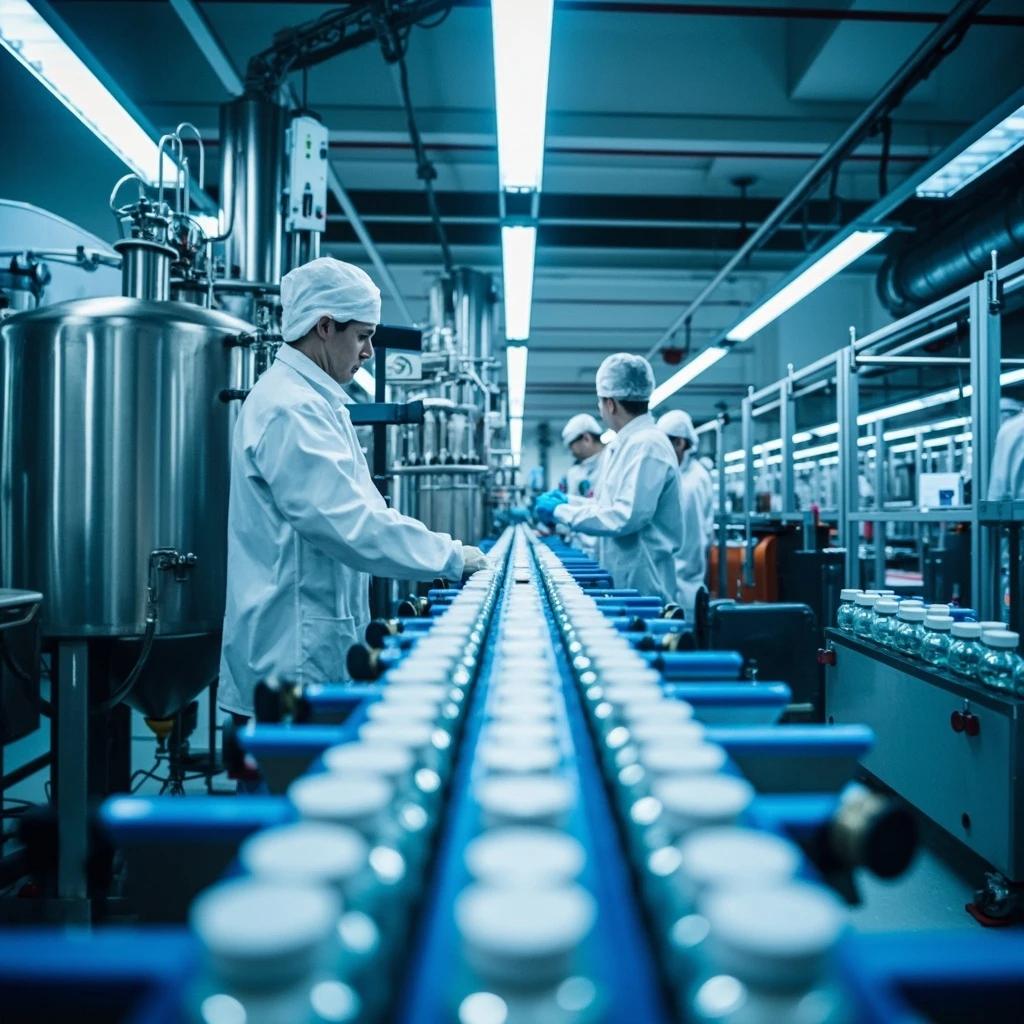
我们的制造商评估框架与品牌排名根本不同——它优先考虑实际生产能力、制造基础设施和供应链韧性,而非营销影响力。VerityRank的制造商评估方法采用严格的、以生产为中心的视角,考察每家公司辅料产品组合背后的实际工厂、反应器和发酵罐。
生产基础设施评估
我们评估每个制造商自有生产设施的数量、地理位置和监管状态。巴斯夫在三大洲拥有六个一体化巨型基地,代表了制造密度的黄金标准,其中一个生产流程的副产品成为另一个流程的原材料,创造了无与伦比的成本效率和供应安全性。罗盖特在全球拥有40多家工厂——加上2025年收购IFF制药解决方案——展示了整合如何创造制造规模优势。我们会对关键生产步骤依赖第三方代工制造的制造商进行扣分。
垂直整合深度
我们衡量每个制造商对其原材料供应链的上游控制程度。信越化学是最佳实践典范,其纤维素生产网络在日本、德国和美国实现三重冗余,确保任何单一区域中断都不会影响其关键的METOLOSE®和L-HPC®辅料产品线的供应。依赖外部供应商提供关键中间体的制造商因固有的供应链脆弱性而得分较低。
资本再投资强度
资本支出占收入的比例是衡量制造承诺的领先指标。龙沙的资本支出与销售比率为19.6%,信越的100亿日元纤维素扩产计划表明了对未来制造能力的坚定信心。我们跟踪多年的资本支出趋势,以区分持续投资与一次性支出峰值。
质量体系成熟度
我们交叉参考FDA DMF注册、欧盟EXCIPACT认证、药典合规状态以及全球监管机构的检查历史。具有零警告信记录和一贯审计表现的制造商获得更高的质量评分。所有评分均根据主要监管数据库进行独立验证。
Our manufacturer evaluation framework is fundamentally different from brand rankings — it prioritizes physical production capabilities, manufacturing infrastructure, and supply chain resilience over marketing presence. VerityRank's manufacturer assessment methodology applies a rigorous, production-centric lens that examines the actual factories, reactors, and fermentation tanks behind each company's excipient portfolio.
Production Infrastructure Assessment
We evaluate the number, geographic distribution, and regulatory status of each manufacturer's owned production facilities. BASF's six Verbund-integrated mega-sites across three continents represent the gold standard of manufacturing density, where byproducts from one production stream become raw materials for another, creating unmatched cost efficiency and supply security. Roquette's 40+ facilities worldwide — bolstered by the 2025 IFF Pharma Solutions acquisition — demonstrate how consolidation creates manufacturing scale advantages. We penalize manufacturers that rely on third-party toll manufacturing for critical production steps.
Vertical Integration Depth
We measure how far upstream each manufacturer controls its raw material supply chain. Shin-Etsu Chemical exemplifies best practice with its triple-redundant cellulose production network spanning Japan, Germany, and the United States, ensuring that no single regional disruption can interrupt supply of its critical METOLOSE® and L-HPC® excipient lines. Manufacturers that depend on external suppliers for key intermediates receive lower scores due to inherent supply chain vulnerability.
Capital Reinvestment Intensity
Capital expenditure as a percentage of revenue serves as a leading indicator of manufacturing commitment. Lonza's 19.6% capex-to-sales ratio and Shin-Etsu's ¥10 billion cellulose expansion program signal deep conviction in future manufacturing capacity. We track multi-year capex trends to distinguish sustained investment from one-time spending spikes.
Quality System Maturity
We cross-reference FDA DMF registrations, EU EXCIPACT certifications, pharmacopoeia compliance status, and inspection histories from global regulatory authorities. Manufacturers with a track record of zero Warning Letters and consistent audit performance receive higher quality scores. All scores are independently verified against primary regulatory databases.
领先的药用辅料制造商通过五种相互关联的生产能力脱颖而出,这些能力共同决定了它们能否成为全球制药行业可靠、长期的供应合作伙伴。
1. 多产品、多基地制造冗余
在多个地理位置分散的工厂生产相同等级的辅料,是当今地缘政治环境下最具价值的制造能力。信越化学投资100亿日元,在三大洲(日本、德国、美国)建立了纤维素醚生产基地,直接响应制药客户对供应安全的需求。同样,巴斯夫的Verbund模式确保如果某条生产流中断,综合体内的替代路径可以维持产出。
2. 所有生产规模均符合cGMP标准
从试验规模到商业规模生产,并在完全符合cGMP的条件下进行过渡,这是许多制造商容易出问题的地方。顶级生产商如赢创在其大型化工综合体内投资了专用的cGMP车间,能够实现从公斤级到吨级的无缝放大,无需重新认证。默克的130多个全球制造和分销中心均采用统一的质量体系运行,确保无论生产地点如何,质量都保持一致。
3. 专有合成和制剂平台
控制专有合成路线(而非依赖通用化学工艺)的制造商既能获得更高利润,也能增强客户粘性。赢创的EUDRAGIT®聚合物平台和卡乐康的Opadry®包衣系统受到数十年制剂专业知识和监管数据的保护,通用竞争对手难以轻易复制。凯爱瑞集团的Sheffield Bio-Science部门使用专有发酵工艺生产细胞培养补充剂,其性能特点是普通替代品无法比拟的。
4. 集成质量源于设计(QbD)过程控制
现代制药生产要求将辅料质量设计到生产过程中,而不是通过最终产品检测来保证。罗盖特控制其从农业到制药的整个供应链,使得QbD原则能够从田间应用到成品辅料。实时过程分析技术(PAT)、自动批记录系统和经过统计验证的控制策略,将世界级制造商与仅满足最低监管要求的制造商区分开来。
5. 技术应用支持基础设施
最有价值的制造商关系超越了工厂大门。卡乐康的20多个全球技术服务实验室构成了一个竞争护城河,纯化学品生产商难以匹敌。这些实验室直接与制药配方科学家合作,优化特定药品中辅料的性能,从而产生转换成本,这种成本可能持续整个药品的商业生命周期。
Leading pharmaceutical excipient manufacturers distinguish themselves through five interconnected production capabilities that collectively determine their ability to serve as reliable, long-term supply partners for the global pharmaceutical industry.
1. Multi-Product, Multi-Site Manufacturing Redundancy
The ability to produce the same excipient grade at multiple, geographically dispersed facilities is the single most valuable manufacturing capability in today's geopolitical environment. Shin-Etsu Chemical has invested ¥10 billion to establish cellulose ether production across three continents (Japan, Germany, USA), directly responding to pharmaceutical customers' demand for supply security. Similarly, BASF's Verbund model ensures that if one production stream is disrupted, alternative pathways within the integrated complex can maintain output.
2. cGMP Compliance Across All Production Scales
The transition from pilot-scale to commercial-scale manufacturing under full cGMP compliance is where many manufacturers stumble. Top-tier producers like Evonik have invested in dedicated cGMP suites within their larger chemical complexes, enabling seamless scale-up from kilogram to ton quantities without requalification. Merck KGaA's 130+ global manufacturing and distribution centers all operate under harmonized quality systems, ensuring consistency regardless of production location.
3. Proprietary Synthesis and Formulation Platforms
Manufacturers that control proprietary synthesis routes — rather than relying on generic chemical processes — enjoy both higher margins and greater customer lock-in. Evonik's EUDRAGIT® polymer platform and Colorcon's Opadry® coating systems are protected by decades of formulation expertise and regulatory data that generic competitors cannot easily replicate. Kerry Group's Sheffield Bio-Science division uses proprietary fermentation processes to produce cell culture supplements with performance characteristics that commodity alternatives cannot match.
4. Integrated Quality-by-Design (QbD) Process Control
Modern pharmaceutical manufacturing demands that excipient quality be designed into the production process rather than tested into the final product. Roquette's control of its entire agricultural-to-pharma supply chain enables QbD principles to be applied from field to finished excipient. Real-time process analytical technology (PAT), automated batch record systems, and statistically validated control strategies separate world-class manufacturers from those merely meeting minimum regulatory requirements.
5. Technical Application Support Infrastructure
The most valuable manufacturer relationships extend beyond the factory gate. Colorcon's 20+ global technical service laboratories represent a competitive moat that pure-play chemical producers struggle to match. These labs work directly with pharmaceutical formulation scientists to optimize excipient performance in specific drug products, creating switching costs that can persist for the entire commercial life of a pharmaceutical product.
药用辅料制造在一个复杂、多层次的监管框架内运作,该框架因高调的质量失败和供应链中断而显著演变。理解这些系统对于评估制造商的可靠性和合规成熟度至关重要。
ICH Q7和Q11:基础框架
国际人用药品技术要求协调理事会(ICH)Q7指南为活性药物成分(API)建立了良好生产规范(GMP)要求,并由此延伸至许多高风险辅料。ICH Q11为原料药(包括起始物料)的开发和制造提供指导。像巴斯夫和默克这样的制造商已将其全球质量体系与ICH指南对齐,从而能够同时符合所有主要监管辖区的要求。
EXCIPACT:新兴的全球标准
EXCIPACT认证计划由国际药用辅料协会(IPEC)和EXCiPACT共同开发,提供辅料制造商GMP和GDP合规的独立第三方认证。山河药辅获得11项欧盟EXCIPACT认证,表明新兴市场制造商能够达到与西方现有企业相同的质量标准。全球超过200个制造基地现已持有EXCIPACT认证,主要制药公司越来越多地将其作为供应商资格要求。
FDA药物主文件(DMF)系统
对于美国市场,制造商向FDA提交II型(原料药)或III型(辅料)DMF,制药公司在其药品申请中引用这些文件。山河药辅的15+份DMF备案和2025年12月成功的FDA现场检查,验证了其质量体系符合世界上最严格的监管标准。DMF数量可作为制造商商业管道和监管成熟度的有用指标。
药典合规
辅料必须符合每个目标市场的相关药典专论:USP-NF(美国)、Ph. Eur.(欧洲)、JP(日本)和ChP(中国)。顶级制造商同时保持对多个药典的合规,使其产品无需重新认证即可用于全球药品。禾大用于注射剂的高纯度辅料符合最严格的多药典标准,包括内毒素水平、颗粒物和元素杂质的要求。
ISO标准与环境管理
除了产品特定的质量标准外,ISO 9001(质量管理)、ISO 14001(环境管理)和ISO 45001(职业健康与安全)认证表明制造商致力于系统化的过程管理。罗盖特在其全球40多个基地获得这些标准认证,提供了质量已嵌入组织文化而非依赖个别基地领导的信心。
这些质量体系——ICH指南、EXCIPACT认证、DMF注册、药典合规和ISO标准——的融合创造了一个多层面的质量保证框架,使制药公司能够自信地从全球合格的制造商处采购辅料。
Pharmaceutical excipient manufacturing operates within a complex, multi-layered regulatory framework that has evolved significantly in response to high-profile quality failures and supply chain disruptions. Understanding these systems is essential for evaluating manufacturer reliability and compliance maturity.
ICH Q7 and Q11: The Foundational Framework
The International Council for Harmonisation (ICH) Q7 guideline establishes Good Manufacturing Practice (GMP) requirements for active pharmaceutical ingredients, and by extension, many high-risk excipients. ICH Q11 provides guidance on development and manufacture of drug substances, including starting materials. Manufacturers like BASF and Merck KGaA have aligned their global quality systems with ICH guidelines, enabling compliance across all major regulatory jurisdictions simultaneously.
EXCIPACT: The Emerging Global Standard
The EXCIPACT certification scheme, jointly developed by IPEC (International Pharmaceutical Excipients Council) and EXCiPACT, provides an independent, third-party certification of excipient manufacturer GMP and GDP compliance. Shanhe Pharmacaps' achievement of 11 EU EXCIPACT certifications demonstrates that emerging-market manufacturers can meet the same quality standards as Western incumbents. Over 200 manufacturing sites worldwide now hold EXCIPACT certification, and major pharmaceutical companies increasingly mandate it as a supplier qualification requirement.
FDA Drug Master Files (DMF) System
For the US market, manufacturers submit Type II (drug substance) or Type III (excipient) DMFs to the FDA, which are referenced by pharmaceutical companies in their drug applications. Shanhe Pharmacaps' 15+ DMF filings and successful December 2025 FDA on-site inspection validate its quality systems against the world's most stringent regulatory standard. DMF volume serves as a useful proxy for a manufacturer's commercial pipeline and regulatory sophistication.
Pharmacopoeia Compliance
Excipients must comply with the relevant pharmacopoeia monographs for each target market: USP-NF (United States), Ph. Eur. (Europe), JP (Japan), and ChP (China). Top-tier manufacturers maintain compliance across multiple pharmacopoeias simultaneously, enabling their products to be used in global drug products without requalification. Croda's high-purity excipients for injectable formulations meet the most stringent multi-compendial standards, including requirements for endotoxin levels, particulate matter, and elemental impurities.
ISO Standards and Environmental Management
Beyond product-specific quality standards, ISO 9001 (quality management), ISO 14001 (environmental management), and ISO 45001 (occupational health and safety) certifications indicate a manufacturer's commitment to systematic process management. Roquette's certification to these standards across its 40+ global sites provides confidence that quality is embedded in organizational culture rather than dependent on individual site leadership.
The convergence of these quality systems — ICH guidelines, EXCIPACT certification, DMF registrations, pharmacopoeia compliance, and ISO standards — creates a multi-layered quality assurance framework that enables pharmaceutical companies to confidently source excipients from qualified manufacturers worldwide.
药用辅料制造业正被五大变革趋势重塑,这些趋势从根本上改变了竞争动态、投资优先级和客户-供应商关系。
1. 生物制剂制造革命
单克隆抗体、细胞和基因疗法以及mRNA药物需要与传统小分子药物完全不同的辅料制造能力。这一转变正在推动对细胞培养基生产(默克、凯瑞集团的Sheffield Bio-Science)、色谱树脂和一次性生物加工耗材的大规模投资。无法服务于生物制剂供应链的制造商,可能被局限于增长较慢、利润率较低的小分子辅料领域。
2. 工业规模脂质纳米颗粒制造
mRNA疫苗革命已将脂质纳米颗粒从实验室新奇事物转变为战略关键的药用材料类别。禾大已在全球四个地点大力投资GMP级脂质生产能力,而赢创在印第安纳州投资2.2亿美元的脂质创新中心,为其在肿瘤学和罕见病疗法中下一波LNP应用做好准备。药用级脂质的制造复杂性——需要在严格控制的条件下进行多步合成,并具有极高的纯度要求——形成了自然进入壁垒,保护了现有制造商。
3. 区域化和供应链冗余
单一来源、最低成本的全球供应链时代已经结束。制药公司现在要求关键辅料至少在两个地理区域生产,最好是三个。信越化学在三大洲的纤维素生产投资直接回应了这一需求。巴斯夫在其欧洲和北美运营之外,启动了其在广东湛江的100亿欧元一体化基地,创造了制药采购组织日益要求的区域多元化。
4. 可持续性驱动的工艺创新
环境绩效已成为辅料制造中的竞争差异化因素。罗盖特的植物基制造平台——将可再生农业原料转化为药用级辅料——具有比石油基竞争对手固有的碳足迹优势。巴斯夫到2050年实现碳中和的承诺及其生物质平衡辅料等级的开发,回应了制药公司的范围三减排目标。未能解决可持续性问题的制造商将日益面临被制药招标排除的风险。
5. 行业整合与品类王者的崛起
2025年罗盖特以50多亿美元收购IFF Pharma Solutions,可能代表着重塑竞争动态的整合浪潮的开始。随着监管复杂性、质量体系成本和客户认证要求的增加,规模优势变得更加明显。中型制造商面临战略选择:通过收购实现品类领导地位、被收购或面临边缘化。随着制药公司寻求减少供应商复杂性,“品类王者”——在特定辅料品类中拥有主导市场份额的制造商——的出现可能会加速。
The pharmaceutical excipient manufacturing sector is being reshaped by five transformative trends that are fundamentally altering competitive dynamics, investment priorities, and customer-supplier relationships.
1. The Biologics Manufacturing Revolution
Monoclonal antibodies, cell and gene therapies, and mRNA-based drugs require entirely different excipient manufacturing capabilities than traditional small-molecule pharmaceuticals. This shift is driving massive investment in cell culture media production (Merck KGaA, Kerry Group's Sheffield Bio-Science), chromatography resins, and single-use bioprocessing consumables. Manufacturers that cannot serve the biologics supply chain risk being confined to the slower-growing, lower-margin small-molecule excipient segment.
2. Lipid Nanoparticle (LNP) Manufacturing at Industrial Scale
The mRNA vaccine revolution has transformed lipid nanoparticles from a laboratory curiosity into a strategically critical pharmaceutical material class. Croda has invested heavily in GMP-grade lipid production capacity across four global sites, while Evonik's $220 million lipid innovation center in Indiana positions it for the next wave of LNP applications in oncology and rare disease therapies. The manufacturing complexity of pharmaceutical-grade lipids — requiring multi-step synthesis under strictly controlled conditions with extraordinary purity requirements — creates natural barriers to entry that protect incumbent manufacturers.
3. Regionalization and Supply Chain Redundancy
The era of single-source, lowest-cost global supply chains is over. Pharmaceutical companies now demand that critical excipients be manufactured in at least two geographic regions, preferably three. Shin-Etsu Chemical's triple-continent cellulose production investment directly responds to this demand. BASF's activation of its €10 billion Zhanjiang, China Verbund site alongside its European and North American operations creates the geographic diversification that pharmaceutical procurement organizations increasingly mandate.
4. Sustainability-Driven Process Innovation
Environmental performance has become a competitive differentiator in excipient manufacturing. Roquette's plant-based manufacturing platform — converting renewable agricultural raw materials into pharmaceutical-grade excipients — has an inherent carbon footprint advantage over petroleum-derived competitors. BASF's commitment to carbon neutrality by 2050 and its development of biomass-balanced excipient grades respond to pharmaceutical companies' Scope 3 emissions reduction targets. Manufacturers that fail to address sustainability will increasingly face exclusion from pharmaceutical tenders.
5. Industry Consolidation and the Rise of Category Kings
The $5+ billion acquisition of IFF Pharma Solutions by Roquette in 2025 may represent the beginning of a consolidation wave that reshapes competitive dynamics. As regulatory complexity, quality system costs, and customer qualification requirements increase, scale advantages become more pronounced. Mid-sized manufacturers face a strategic choice: acquire to achieve category leadership, be acquired, or risk marginalization. The emergence of "category kings" — manufacturers with dominant market share in specific excipient categories — will likely accelerate as pharmaceutical companies seek to reduce supplier complexity.
药用辅料制造商排名表现出中等稳定性,但会受到并购、重大产能投资、监管行动和治疗需求模式变化的显著影响,从而发生有意义的重新定位。 VerityRank每年更新一次制造商评估,并在发生重大企业事件时进行临时更新。
年度重新评估周期
每年,通常在主要制造商完成财年报告后(大多数公司为第一季度至第二季度),我们对所有排名制造商进行全面重新评估。此次重新评估纳入更新的财务数据、新的资本支出公告、制造基地数量和监管状态的变化,以及FDA、EMA和其他机构的最新检查结果。2025-2026年排名周期捕捉了几个变革性事件,包括罗盖特收购IFF Pharma Solutions以及信越化学的100亿日元纤维素扩张计划。
事件驱动的临时更新
显著改变制造商竞争地位的重大事件会触发年度周期外的临时排名更新。这些事件包括:交易价值超过5亿美元的并购;重大监管行动,如FDA警告信或影响cGMP制造状态的进口警报;灾难性生产中断(例如巴斯夫2024年异植物醇工厂火灾);以及超过2亿美元、实质性扩大制造产能的资本投资公告。临时更新在触发事件发生后30天内发布。
驱动排名变化的因素
制造产能扩张是排名上升的最常见驱动因素,如罗盖特收购后的崛起和赢创因脂质创新中心投资而加强的地位所示。相反,长期生产中断、质量体系故障或制造资产剥离通常会导致排名下降。亚什兰的投资组合优化——包括剥离其营养保健品业务——代表了一种战略重新定位,虽然减少了近期收入,但可能加强长期制造重点和竞争地位。
透明度和修订政策
所有排名变化都有具体理由记录,并引用底层数据来源。历史排名被保留并可访问,从而能够对制造商轨迹进行纵向分析。我们鼓励制造商通过我们的数据提交流程提供更新信息,这些信息在纳入后续排名周期之前会经过独立来源的审查和验证。读者应注意,制造商排名反映的是某个时间点的评估,在采购决策时应辅以当前的尽职调查。
Pharmaceutical excipient manufacturer rankings exhibit moderate stability but are subject to meaningful repositioning driven by mergers and acquisitions, major capacity investments, regulatory actions, and shifts in therapeutic demand patterns. VerityRank updates its manufacturer assessments on an annual cycle, with interim updates triggered by material corporate events.
Annual Reassessment Cycle
Each year, typically following the completion of major manufacturers' fiscal year reporting (Q1-Q2 for most companies), we conduct a comprehensive reassessment of all ranked manufacturers. This reassessment incorporates updated financial data, new capital expenditure announcements, changes in manufacturing site count and regulatory status, and the latest inspection outcomes from FDA, EMA, and other authorities. The 2025-2026 ranking cycle captured several transformative events including Roquette's IFF Pharma Solutions acquisition and Shin-Etsu Chemical's ¥10 billion cellulose expansion program.
Event-Driven Interim Updates
Material events that significantly alter a manufacturer's competitive position trigger interim ranking updates outside the annual cycle. These include: mergers and acquisitions exceeding $500 million in transaction value; major regulatory actions such as FDA Warning Letters or import alerts affecting cGMP manufacturing status; catastrophic production disruptions (e.g., BASF's 2024 isophytol plant fire); and capital investment announcements exceeding $200 million that materially expand manufacturing capacity. Interim updates are published within 30 days of the triggering event.
Factors Driving Ranking Changes
Manufacturing capacity expansion is the most common driver of upward movement, as demonstrated by Roquette's post-acquisition rise and Evonik's strengthening position following its lipid innovation center investment. Conversely, prolonged production disruptions, quality system failures, or divestiture of manufacturing assets typically drive downward movement. Ashland's portfolio optimization — including the divestiture of its nutraceuticals business — represents a strategic repositioning that, while reducing near-term revenue, may strengthen long-term manufacturing focus and competitive positioning.
Transparency and Revision Policy
All ranking changes are documented with specific justifications referencing the underlying data sources. Historical rankings are preserved and accessible, enabling longitudinal analysis of manufacturer trajectories. We encourage manufacturers to provide updated information through our data submission process, which is reviewed and validated against independent sources before incorporation into subsequent ranking cycles. Readers should note that manufacturer rankings reflect a point-in-time assessment and should be supplemented with current due diligence for procurement decisions.