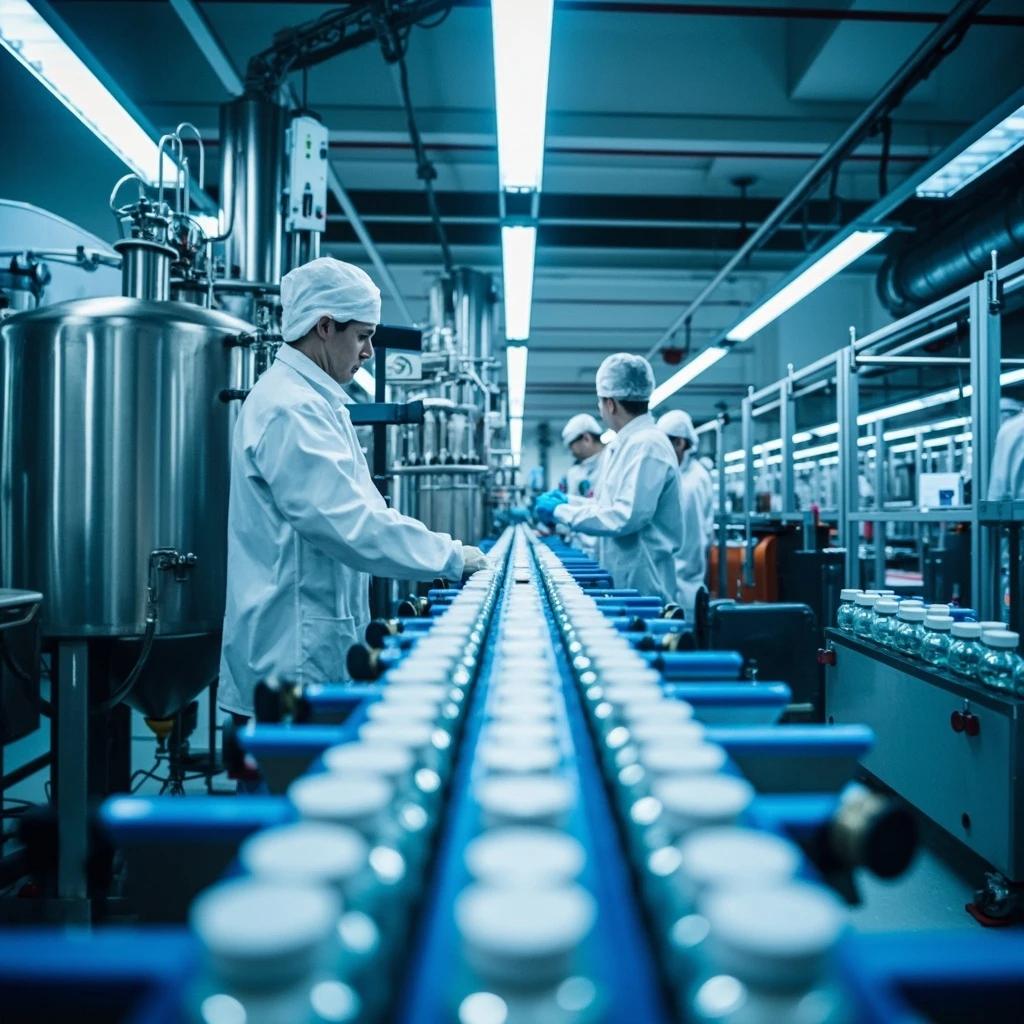
VerityRank采用专注于制造业的方法论,专门用于评估制药生产能力。我们的评估框架优先考虑实体制造基础设施而非品牌指标,其中制造规模和产能占40%,品类制造广度占30%,供应链独立性占15%,全球财务实力占15%。
数据来源
• 公司年报和SEC文件,包含详细的制造部门披露
• FDA机构检查报告、EMA GMP证书及其他监管制造数据库
• 公司资本支出披露,跟踪制造投资
• 行业出版物,包括《制药技术》、《合同制药》和《FiercePharma Manufacturing》
• 行业协会数据库和制药制造会议论文集
• 公司直接披露的设施数量、产能指标和生产量
入选标准
只有拥有大量自有制造资产的公司才有资格参与此排名。纯品牌公司(将所有生产外包给CDMO)、无制造设施的虚拟制药公司以及无生产能力的分销商均被排除。公司必须直接拥有并运营至少5个符合cGMP标准的制造设施才能入选。
评分与更新
制造能力根据披露的设施数量、生产量、API合成能力和资本投资进行评分。品类广度根据制药制造模式的完整范围进行评估,包括小分子合成、生物发酵、疫苗生产、ADC偶联、细胞/基因治疗和放射性药物生产。排名每半年更新一次,以反映新设施启用、收购和重大产能投资。
VerityRank employs a manufacturing-focused methodology specifically calibrated for evaluating pharmaceutical production capabilities. Our assessment framework prioritizes physical manufacturing infrastructure over brand metrics, with 40% weight on manufacturing scale and production capacity, 30% on category manufacturing breadth, 15% on supply chain independence, and 15% on global financial strength.
Data Sources
• Corporate annual reports and SEC filings with detailed manufacturing segment disclosures
• FDA Establishment Inspection Reports, EMA GMP certificates, and other regulatory manufacturing databases
• Company capital expenditure disclosures tracking manufacturing investments
• Industry publications including Pharmaceutical Technology, Contract Pharma, and FiercePharma Manufacturing
• Trade association databases and pharmaceutical manufacturing conference proceedings
• Direct company disclosures on facility counts, capacity metrics, and production volumes
Inclusion Criteria
Only companies with substantial self-owned manufacturing assets are eligible for this ranking. Pure brand companies that outsource all production to CDMOs, virtual pharmaceutical companies without manufacturing facilities, and distributors without production capabilities are excluded. Companies must demonstrate direct ownership and operation of at least 5 cGMP-compliant manufacturing facilities to qualify.
Scoring & Updates
Manufacturing capacity is scored based on disclosed facility counts, production volumes, API synthesis capabilities, and capital investment. Category breadth is assessed against the full spectrum of pharmaceutical manufacturing modalities including small-molecule synthesis, biologic fermentation, vaccine production, ADC conjugation, cell/gene therapy, and radiopharmaceutical production. Rankings are updated semi-annually to reflect new facility openings, acquisitions, and major capacity investments.
2026年世界级制药制造商的定义是:能够独立生产多种制造模式的复杂原料药和制剂,同时保持最高合规标准的能力。最具竞争力的制造商已远远超越基本的片剂压制和液体灌装,掌握了现代制药生产技术的全谱系。
关键制造能力
• API合成独立性:通过复杂有机化学、发酵或半合成内部合成活性药物成分的能力。领导者如艾伯维(投资1.95亿美元扩建API设施)和罗氏对其关键产品保持完全的API自给自足,消除了对外部供应商的依赖,这些供应商可能面临质量或地缘政治中断。
• 多模式生产:掌握小分子化学合成、大分子生物制品生产(哺乳动物细胞培养、微生物发酵)、疫苗制造,以及日益增长的先进模式,如抗体药物偶联物(ADC)偶联、细胞疗法制造和放射性药物生产。
• 全球设施网络:分布在北美、欧洲和亚太地区的生产基地,每个设施都持有主要监管机构(FDA、EMA、PMDA、NMPA)的认证。辉瑞的30多个全球生产基地和赛诺菲的37个自营设施体现了这种网络化方法。
• 连续制造能力:从传统批次处理向连续制造平台转变,提高效率、减少浪费并实现更快的生产规模扩展。赛诺菲的Modulus平台代表了模块化连续生物制造的尖端技术。
• 质量体系卓越:零FDA警告信,所有设施成功通过监管检查,并实施先进过程分析技术(PAT)进行实时质量监控。
最具能力的制造商将这五个属性结合起来,创建了竞争对手极难复制的生产生态系统。对于采购专业人士而言,这些能力直接转化为供应可靠性、质量一致性以及对需求变化的更快响应。
A world-class pharmaceutical manufacturer in 2026 is defined by its ability to independently produce complex drug substances and products across multiple manufacturing modalities while maintaining the highest regulatory compliance standards. The most competitive manufacturers have moved far beyond basic tablet compression and liquid filling to master the entire spectrum of modern pharmaceutical production technologies.
Key Manufacturing Capabilities
• API Synthesis Independence: The ability to internally synthesize active pharmaceutical ingredients through complex organic chemistry, fermentation, or semi-synthesis. Leaders like AbbVie (investing USD 195 million in API facility expansion) and Roche maintain complete API self-sufficiency for their key products, eliminating dependence on external suppliers who may face quality or geopolitical disruptions.
• Multi-Modality Production: Mastery of small-molecule chemical synthesis, large-molecule biologic production (mammalian cell culture, microbial fermentation), vaccine manufacturing, and increasingly, advanced modalities like antibody-drug conjugate (ADC) conjugation, cell therapy manufacturing, and radiopharmaceutical production.
• Global Facility Network: Geographically distributed manufacturing sites across North America, Europe, and Asia-Pacific, with each facility maintaining certifications from major regulatory agencies (FDA, EMA, PMDA, NMPA). Pfizer's 30+ global manufacturing sites and Sanofi's 37 self-operated facilities exemplify this network approach.
• Continuous Manufacturing Capability: Transition from traditional batch processing to continuous manufacturing platforms that improve efficiency, reduce waste, and enable faster production scaling. Sanofi's Modulus platform represents the cutting edge of modular continuous biomanufacturing.
• Quality Systems Excellence: Zero FDA Warning Letters, successful regulatory inspections across all facilities, and implementation of advanced process analytical technology (PAT) for real-time quality monitoring.
The most capable manufacturers combine all five of these attributes, creating production ecosystems that are extremely difficult for competitors to replicate. For procurement professionals, these capabilities directly translate into supply reliability, quality consistency, and faster response to demand changes.
制药业前所未有的制造回流浪潮——已宣布的投资总额超过1000亿美元——是由COVID-19大流行期间开始并随着地缘政治紧张局势加剧而强化的对供应链风险的根本性重新评估所驱动的。曾经被视为成本优化策略(将生产外包给低成本国家)的做法现在被视为关键脆弱性。
制造回流的驱动因素
• 供应链主权:大流行暴露了原料药生产在中国和印度的危险集中,单个工厂的停工可能扰乱基本药物的全球供应。美国和欧洲的政府现在为国内制药制造提供税收优惠和直接资金,使回流在几十年来首次在经济上可行。
• 生物类似药和复杂仿制药壁垒:先进的生物药、抗体偶联药物和细胞/基因疗法的生产复杂性使得CDMO外包存在风险。这些产品的质量控制要求、冷链物流和专有制造工艺有利于创新者保持完全控制的内部生产。
• 地缘政治风险管理:中美紧张局势、俄乌冲突和中东不稳定使得单一来源或单一地区供应策略不可行。公司正在多个地缘政治区域建设冗余制造能力——罗氏500亿美元的美国投资和诺华230亿美元的承诺既是产能扩张,也是地缘政治对冲。
• 上市速度优势:对于像GLP-1药物这样需求快速增长的产品,拥有制造基础设施可以比与服务于多个客户的CDMO谈判实现更快的产能扩张。礼来决定自建而非外包GLP-1产能反映了这一战略考量。
• 利润率保护:虽然内部制造需要更高的资本投资,但它消除了CDMO提取的利润,并在产能短缺期间提供免受CDMO涨价影响的保护。
这一回流趋势对采购策略具有深远影响。买家应预期从拥有地理多元化生产网络的制造商获得更稳定的供应,而仍然严重依赖外包生产的公司则面临日益增加的供应风险。
The pharmaceutical industry's unprecedented wave of manufacturing reshoring — totaling over USD 100 billion in announced investments — is driven by a fundamental reassessment of supply chain risk that began during the COVID-19 pandemic and has intensified with growing geopolitical tensions. What was once considered a cost-optimization strategy (outsourcing production to low-cost countries) is now viewed as a critical vulnerability.
Drivers of Manufacturing Reshoring
• Supply Chain Sovereignty: The pandemic exposed dangerous concentrations of API production in China and India, where a single factory shutdown could disrupt global supply of essential medicines. Governments in the U.S. and Europe are now offering tax incentives and direct funding for domestic pharmaceutical manufacturing, making reshoring economically viable for the first time in decades.
• Biosimilar and Complex Generic Barriers: Advanced biologic drugs, ADCs, and cell/gene therapies have production complexity that makes CDMO outsourcing risky. The quality control requirements, cold chain logistics, and proprietary manufacturing processes for these products favor in-house production where the innovator maintains complete control.
• Geopolitical Risk Management: U.S.-China tensions, the Russia-Ukraine conflict, and Middle Eastern instability have made single-source or single-region supply strategies untenable. Companies are building redundant manufacturing capacity across multiple geopolitical zones — Roche's USD 50 billion U.S. investment and Novartis's USD 23 billion commitment are as much about geopolitical hedging as about capacity expansion.
• Speed-to-Market Advantages: For products with rapidly growing demand like GLP-1 drugs, owning the manufacturing infrastructure enables faster capacity expansion than negotiating with CDMOs who serve multiple clients. Eli Lilly's decision to build rather than outsource GLP-1 production capacity reflects this strategic calculation.
• Margin Protection: While in-house manufacturing requires higher capital investment, it eliminates the profit margin that CDMOs extract and provides insulation against CDMO price increases during capacity shortages.
This reshoring trend has profound implications for procurement strategy. Buyers should expect more stable supply from manufacturers with geographically diversified production networks, while companies still heavily dependent on outsourced production face increasing supply risk.
现代制药制造涵盖了从传统小分子化学合成到前沿细胞和基因治疗制造的多样化生产技术。了解这些技术对于评估制造商的真实生产能力和技术成熟度至关重要。
核心制造技术类别
• 小分子化学合成: 传统的制药制造,涉及多步有机化学反应、结晶、过滤、干燥和研磨。这仍然是制药生产的支柱,占全球药物总量的绝大部分。领导者包括梯瓦(每年760亿剂)、辉瑞(30多个工厂)和赛诺菲(37个工厂)。先进实践者采用连续流化学以提高产率并减少废物。
• 大分子生物制品生产: 使用基因工程哺乳动物细胞系(CHO细胞)在高达20,000升的生物反应器中生产单克隆抗体、融合蛋白和其他生物制品。需要细胞系开发、上游细胞培养优化、下游纯化(蛋白A层析)和病毒安全性测试方面的专业知识。罗氏、强生和艾伯维保持着行业领先的生物制品制造能力。
• 疫苗制造: 生产传统疫苗(灭活、减毒活、亚单位)、mRNA疫苗(脂质纳米颗粒封装)和病毒载体疫苗。赛诺菲、辉瑞和默克是全球主要的疫苗制造商,赛诺菲的Modulus平台代表了灵活疫苗生产的未来。
• 抗体药物偶联物(ADC)制造: 最复杂的制药制造过程,需要分别生产抗体(生物工艺)、细胞毒性载荷(需要遏制措施的高效化合物合成)以及连接它们的偶联化学。阿斯利康/第一三共(Enhertu)和恒瑞已建立了领先的ADC制造能力。
• 细胞与基因治疗制造: 生产自体CAR-T细胞、异体细胞疗法和基于AAV的基因疗法。物流极其复杂,受静脉到静脉时间限制。诺华(Kymriah、Pluvicto放射配体疗法)和强生(Carvykti)是该领域的制造领导者。
• 放射性药物生产: 治疗性放射性药物的制造,需要集成回旋加速器/放射性同位素生产、放射化学和无菌灌装,由于放射性衰变,时间窗口极短。诺华230亿美元的投资使其成为这一新兴类别的主导者。
最先进的制造商在4-6个技术类别中展现出精通。对于采购专业人士来说,制造商的技术组合广度直接与其生产您的组织可能需要的全范围药品的能力相关。
Modern pharmaceutical manufacturing encompasses a diverse array of production technologies, from traditional small-molecule chemical synthesis to cutting-edge cell and gene therapy manufacturing. Understanding these technologies is essential for evaluating a manufacturer's true production capabilities and technological sophistication.
Core Manufacturing Technology Categories
• Small-Molecule Chemical Synthesis: Traditional pharmaceutical manufacturing involving multi-step organic chemistry reactions, crystallization, filtration, drying, and milling. This remains the backbone of pharmaceutical production, accounting for the majority of global drug volumes. Leaders include Teva (76 billion doses/year), Pfizer (30+ facilities), and Sanofi (37 facilities). Advanced practitioners employ continuous flow chemistry for improved yield and reduced waste.
• Large-Molecule Biologic Production: Manufacturing of monoclonal antibodies, fusion proteins, and other biologics using genetically engineered mammalian cell lines (CHO cells) grown in bioreactors up to 20,000 liters. Requires expertise in cell line development, upstream cell culture optimization, downstream purification (Protein A chromatography), and viral safety testing. Roche, Johnson & Johnson, and AbbVie maintain industry-leading biologic manufacturing capabilities.
• Vaccine Manufacturing: Production of traditional vaccines (inactivated, live-attenuated, subunit), mRNA vaccines (lipid nanoparticle encapsulation), and viral vector vaccines. Sanofi, Pfizer, and Merck are the dominant vaccine manufacturers globally, with Sanofi's Modulus platform representing the future of flexible vaccine production.
• Antibody-Drug Conjugate (ADC) Manufacturing: The most complex pharmaceutical manufacturing process, requiring separate production of the antibody (biologic process), the cytotoxic payload (highly potent compound synthesis with containment requirements), and the conjugation chemistry linking them. AstraZeneca/Daiichi Sankyo (Enhertu) and Hengrui have built leading ADC manufacturing capabilities.
• Cell & Gene Therapy Manufacturing: Production of autologous CAR-T cells, allogeneic cell therapies, and AAV-based gene therapies. Extremely complex logistics with vein-to-vein time constraints. Novartis (Kymriah, Pluvicto radioligand therapy) and Johnson & Johnson (Carvykti) are manufacturing leaders in this space.
• Radiopharmaceutical Production: Manufacturing of therapeutic radiopharmaceuticals requiring integration of cyclotron/radioisotope production, radiochemistry, and sterile filling within extremely short time windows due to radioactive decay. Novartis's USD 23 billion investment makes it the dominant player in this emerging category.
The most advanced manufacturers demonstrate mastery across 4-6 of these technology categories. For procurement professionals, a manufacturer's technology portfolio breadth directly correlates with its ability to produce the full range of pharmaceutical products your organization may require.
中国的制药制造业在过去十年中经历了显著的质量转型,领先的中国制造商现在已达到与其西方同行相当的标准。中国政府自2015年开始的监管整顿,加上药品上市许可持有人制度的引入和仿制药一致性评价的强制要求,推动了整个行业制造质量的巨大提升。
质量标准趋同
中国顶级制造商,包括恒瑞医药,现在运营符合ICH指南的设施,并已获得FDA和EMA的批准。恒瑞的制造设施已多次通过FDA检查,并向全球制药公司供应活性药物成分。该公司对现行良好生产规范的遵守已通过多个司法管辖区的成功监管检查得到验证。
成本结构优势
中国制药制造商在原料药生产和成品制剂制造方面保持显著的成本优势。较低的制造设施建设成本、有竞争力的制药制造人员劳动力成本以及靠近原材料和中间体供应商的地理位置,创造了结构性成本优势,即使质量标准与西方规范趋同,这些优势仍然存在。
技术差距与优势
虽然中国制造商在小分子合成和仿制药生产方面已达到同等水平,但在先进生物制剂制造方面仍存在差距,特别是在非常大规模哺乳动物细胞培养和复杂ADC偶联工艺方面。然而,这些差距正在迅速缩小。恒瑞的内部ADC制造能力和不断增长的生物制品管线表明,中国制造商正在投资以缩小技术差距。在某些领域,如连续流化学,由于更近期的设施建设采用了最新技术,中国制造商实际上领先于许多西方同行。
对于全球采购专业人士来说,中国制药制造商现在在许多产品类别中代表了西方供应商的可靠替代方案。然而,尽职调查必须考虑公司特定的质量记录,而不是应用广泛的地理假设。最好的中国制造商达到或超过西方质量标准,而行业平均水平仍然落后;仔细的供应商资格认证至关重要。
China's pharmaceutical manufacturing sector has undergone a remarkable quality transformation over the past decade, with leading Chinese manufacturers now achieving standards comparable to their Western counterparts. The Chinese government's regulatory crackdown beginning in 2015, combined with the introduction of the Marketing Authorization Holder (MAH) system and mandatory consistency evaluations for generic drugs, has forced a dramatic upgrade in manufacturing quality across the industry.
Quality Standards Convergence
China's top manufacturers, including Hengrui Pharma, now operate facilities that comply with ICH guidelines and have received approvals from the FDA and EMA. Hengrui has passed multiple FDA inspections for its manufacturing facilities and supplies active pharmaceutical ingredients (APIs) to global pharmaceutical companies. The company's adherence to current Good Manufacturing Practices (cGMP) is validated by successful regulatory inspections across multiple jurisdictions.
Cost Structure Advantages
Chinese pharmaceutical manufacturers maintain significant cost advantages in API production and finished dosage manufacturing. Lower construction costs for manufacturing facilities (typically 30-50% less than equivalent U.S. facilities), competitive labor costs for skilled pharmaceutical manufacturing personnel, and proximity to raw material and intermediate suppliers create structural cost advantages that persist even as quality standards converge with Western norms.
Technology Gaps and Strengths
While Chinese manufacturers have achieved parity in small-molecule synthesis and generic drug production, gaps remain in advanced biologic manufacturing, particularly mammalian cell culture at very large scale (10,000L+ bioreactors) and complex ADC conjugation processes. However, these gaps are narrowing rapidly. Hengrui's in-house ADC manufacturing capabilities and the company's growing pipeline of biologic products demonstrate that Chinese manufacturers are making the necessary investments to close technology gaps. In some areas, such as continuous flow chemistry, Chinese manufacturers are actually ahead of many Western counterparts due to more recent facility construction incorporating the latest technologies.
For global procurement professionals, Chinese pharmaceutical manufacturers now represent credible alternatives to Western suppliers for many product categories. However, due diligence must account for company-specific quality track records rather than applying broad geographic assumptions. The best Chinese manufacturers meet or exceed Western quality standards, while the industry average still trails; careful supplier qualification is essential.