SPC(石塑复合)、WPC(木塑复合)和强化地板是三种最流行的刚性芯地板选择,但它们在成分、性能特点和理想应用方面存在显著差异。
1. SPC 地板(石塑复合)
成分:SPC,也称为刚性芯乙烯基地板,其芯材主要由石灰石粉(碳酸钙)、聚氯乙烯(PVC)和稳定剂组成。这使其具有异常致密和坚硬的芯材。
主要特点:它尺寸极其稳定,意味着不会随温度变化而大幅膨胀或收缩。它100% 防水,高度抗凹陷,并提供出色的抗压痕性。其芯材比 WPC 更薄,同时提供相似或更大的结构刚性。
最佳用途:高人流量商业空间、厨房、浴室、地下室以及任何有潮湿问题的区域。行业领导者如Shaw Industries(其 Floorté PRO 系列)和Kronospan(其 Rocko 品牌)因其卓越的硬度和稳定性而大力投资 SPC 技术。
2. WPC 地板(木塑复合)
成分:WPC 的芯材是木浆或木粉、塑料和发泡剂的发泡复合材料。与 SPC 相比,这形成了稍具柔韧性和更软的芯材。
主要特点:WPC 也100% 防水,但由于其蜂窝状芯材结构,脚下感觉更温暖、更柔软。它提供出色的吸音效果,行走时更安静。然而,其尺寸稳定性略逊于 SPC,尤其是在极端温度波动下。
最佳用途:住宅起居区、卧室以及舒适性和隔音性优先的空间。Shaw 的 Floorté Classic系列是专为高端住宅舒适度设计的 WPC 地板的典型代表。
3. 强化地板
成分:强化地板是一种多层合成产品。它通常由高密度纤维板(HDF)芯材(由木纤维和树脂制成)组成,上面覆盖高分辨率装饰层(模仿木材或石材),并饰以透明耐磨层。
主要特点:虽然现代强化地板可以高度防水(并非完全防水),但其 HDF 芯材在接触积水时容易膨胀。其主要优势在于出色的表面耐用性和抗刮擦性,通常以 AC(耐磨等级)级别(如 AC4 或 AC5)来评定。它是三者中通常最经济实惠的选择。
最佳用途:住宅环境中的客厅、卧室和走廊,这些地方潮湿不是主要问题。Mohawk Industries(其 Pergo 品牌是强化地板的先驱)和Egger Group是强化地板制造的全球领导者,以其高 AC 等级和逼真的压纹而闻名。
总结:在易潮湿区域,选择SPC以获得最大的抗凹陷性和稳定性;在住宅空间,选择WPC以获得更柔软、更安静的感觉;在干燥区域,选择强化地板以获得出色的抗刮擦性和经济实惠。
SPC (Stone Plastic Composite), WPC (Wood Plastic Composite), and Laminate flooring are three of the most popular rigid core flooring options, but they differ significantly in their composition, performance characteristics, and ideal applications.
1. SPC Flooring (Stone Plastic Composite)
Composition: SPC, also known as rigid core vinyl, has a core made primarily of limestone powder (calcium carbonate), polyvinyl chloride (PVC), and stabilizers. This gives it an exceptionally dense and hard core.
Key Characteristics: It is extremely dimensionally stable, meaning it won't expand or contract much with temperature changes. It is 100% waterproof, highly dent-resistant, and offers excellent indentation resistance. Its core is thinner than WPC while providing similar or greater structural rigidity.
Best For: High-traffic commercial spaces, kitchens, bathrooms, basements, and any area with moisture concerns. Industry leaders like Shaw Industries (with its Floorté PRO series) and Kronospan (with its Rocko brand) have heavily invested in SPC technology due to its superior hardness and stability.
2. WPC Flooring (Wood Plastic Composite)
Composition: WPC's core is a foamed composite of wood pulp or wood flour, plastic, and a foaming agent. This creates a slightly more flexible and softer core compared to SPC.
Key Characteristics: WPC is also 100% waterproof but offers a warmer, softer feel underfoot due to its cellular core structure. It provides superior sound absorption, making it quieter to walk on. However, it is slightly less dimensionally stable than SPC, especially in extreme temperature fluctuations.
Best For: Residential living areas, bedrooms, and spaces where comfort and acoustic insulation are priorities. Shaw's Floorté Classic series is a prime example of WPC flooring designed for premium residential comfort.
3. Laminate Flooring
Composition: Laminate is a multi-layer synthetic product. It typically consists of a high-density fiberboard (HDF) core made from wood fibers and resin, topped with a high-resolution photographic layer that mimics wood or stone, and finished with a transparent wear layer.
Key Characteristics: While modern laminate can be highly water-resistant (not fully waterproof), its HDF core is susceptible to swelling if exposed to standing water. Its main strength lies in its exceptional surface durability and scratch resistance, often rated by AC (Abrasion Class) levels like AC4 or AC5. It is typically the most budget-friendly option among the three.
Best For: Living rooms, bedrooms, and hallways in residential settings where moisture is not a primary concern. Mohawk Industries (with its Pergo brand, a pioneer in laminate) and Egger Group are global leaders in laminate manufacturing, known for their high AC ratings and realistic embossing.
Summary: Choose SPC for maximum dent resistance and stability in moisture-prone areas; choose WPC for a softer, quieter feel in residential spaces; and choose Laminate for superior scratch resistance and budget-friendliness in dry areas.
天然石材和工程石材都是优质表面材料,但它们的来源、特性及理想应用场景存在根本差异。理解这些差异对建筑师、设计师和业主至关重要。
1. 天然石材:采自地球的馈赠
来源:天然石材(如大理石、花岗岩、石灰岩、板岩或洞石)是地质作用的产物。它直接从地球开采成大型荒料,再经切割、抛光或表面处理制成板材或瓷砖。每块石材都独一无二,其颜色、纹理和图案的天然变化源于自然形成过程。
主要特性:独特性是其最大的美学优势。但天然石材具有多孔性,需定期密封以防污渍。它也可能被酸性物质(如柠檬汁或葡萄酒)侵蚀,尤其是大理石和石灰岩。其物理特性(如硬度和孔隙率)因石材种类不同而差异显著。
行业领导者:Polycor Inc. 是全球最大的天然石材开采商,拥有帝国大厦所用印第安纳石灰岩等传奇采石场。其产品系列展现了天然石材的多样性与传承。
2. 工程石材:人造精工之作
来源:工程石材是一种人造复合材料。最常见的类型是石英石台面(如Silestone),由粉碎的天然石英(约90%)与聚合物树脂和颜料混合制成。较新的创新如烧结石材(如Dekton),通过极端高温高压将天然矿物融合成致密均匀的板材。
主要特性:主要优势在于一致性和可预测性。它提供均匀的外观,无孔表面无需密封,且高度耐污、耐刮擦和抗冲击。通常比天然石材更坚固、更具韧性。由Cosentino引领的最新行业趋势是开发零结晶二氧化硅(Q0)工程石材,如其Éclos系列,消除了加工过程中二氧化硅粉尘的健康隐患。
总结:若您珍视唯有地质作用才能创造的纯正独特个性、永恒美感与自然变化,请选择天然石材。若您的优先需求是均匀性、易维护性、卓越耐污性及在厨房台面、高流量地面等严苛应用中的可预测性能,请选择工程石材。
Natural stone and engineered stone are both premium surface materials, but their origins, properties, and ideal applications are fundamentally different. Understanding these differences is critical for architects, designers, and homeowners.
1. Natural Stone: Quarried from the Earth
Origin: Natural stone, such as marble, granite, limestone, slate, or travertine, is a product of geology. It is quarried directly from the earth in large blocks, then cut, polished, or finished into slabs or tiles. Each piece is unique, with inherent variations in color, veining, and pattern that come from its natural formation.
Key Characteristics: Its uniqueness is its greatest aesthetic strength. However, natural stone is porous, requiring regular sealing to prevent staining. It can also be susceptible to etching from acidic substances like lemon juice or wine, particularly with marble and limestone. Its physical properties—such as hardness and porosity—vary significantly by type.
Industry Leaders: Polycor Inc., the world's largest natural stone quarrier, owns legendary quarries like the Indiana Limestone used in the Empire State Building. Their portfolio showcases the diversity and heritage of natural stone.
2. Engineered Stone: Man-Made Precision
Origin: Engineered stone is a man-made composite. The most common type, quartz surfacing (like Silestone), is made by combining crushed natural quartz (approximately 90%) with polymer resins and pigments. Newer innovations, like sintered stone (such as Dekton), use extreme heat and pressure to fuse natural minerals into a dense, homogenous slab.
Key Characteristics: The primary advantage is consistency and predictability. It offers a uniform appearance, and its non-porous surface requires no sealing and is highly resistant to staining, scratching, and impact. It is also generally stronger and more flexible than natural stone. The latest industry trend, pioneered by Cosentino, is the development of zero-crystalline-silica (Q0) engineered stone like its Éclos line, which eliminates the health concerns associated with silica dust during fabrication.
Summary: Choose natural stone if you value the authentic, unique character, timeless beauty, and natural variations that only geological processes can create. Choose engineered stone if your priorities are uniformity, ease of maintenance, superior stain resistance, and predictable performance in demanding applications like kitchen countertops and high-traffic flooring.
实木地板和工程实木地板都是优质木地板选项,但它们的结构、稳定性和对不同环境的适用性差异显著。
1. 实木地板
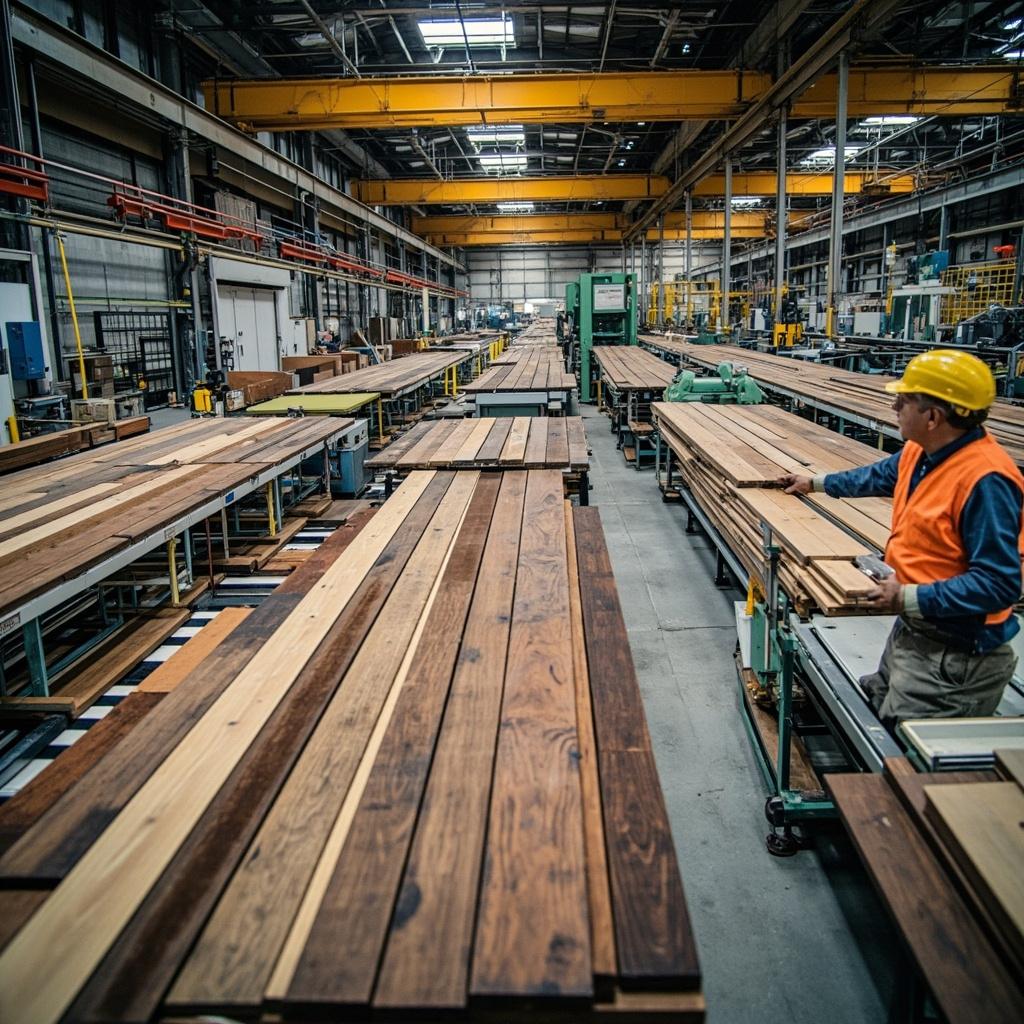
结构:实木地板正如其名,是一整块木材,由橡木、枫木、胡桃木或樱桃木等硬木树种铣制而成。厚度通常为3/4英寸(约19毫米)。
主要特点:其最大优势在于真实性和耐久性。在其使用寿命(通常为50-100年)内可多次打磨和重新上漆,从而改变颜色或恢复原始美感。然而,实木会随湿度变化显著膨胀和收缩,这意味着它不能安装在地下室或混凝土板上,也不建议用于浴室等高湿度区域。
行业领导者:莫霍克工业是全球实木地板生产的领导者,年产量达5亿平方英尺。大自然家居主导中国市场,连续七年保持实木地板销量第一。
2. 工程实木地板
结构:工程实木地板是一种多层复合材料。它由表层(耐磨层)为真实硬木贴面,与胶合板、高密度纤维板或其他稳定材料芯层通过交叉纹理结构粘合而成。这种交叉纹理结构使其尺寸稳定性大大提高。
主要特点:主要优势是卓越的稳定性。它可以安装在混凝土板上、地下室甚至地暖系统上,而不会有过度的膨胀或收缩风险。虽然高质量的工程实木地板可以打磨一到两次(取决于表层贴面的厚度),但其翻新次数不如实木地板多。
行业领导者:萧氏工业旗下Anderson Tuftex品牌提供优质的工程实木地板。欧洲巨头如Tarkett和Egger也拥有广泛的工程木地板产品线,针对稳定性和现代安装方法进行了优化。
总结:如果您重视地板长期使用寿命中多次翻新的能力,且安装在地面以上的木基层上,请选择实木地板。如果您需要多功能性——它是地下室、混凝土板和地暖住宅的首选,因为在这些地方实木地板表现不佳。
Solid hardwood and engineered hardwood are both premium wood flooring options, but their construction, stability, and suitability for different environments vary significantly.
1. Solid Hardwood Flooring
Construction: Solid hardwood is exactly what it sounds like: a single piece of wood, milled from a hardwood species such as oak, maple, walnut, or cherry. It is typically 3/4 inch (about 19mm) thick.
Key Characteristics: Its greatest strength is its authenticity and longevity. It can be sanded and refinished multiple times over its lifespan (often 50-100 years), allowing you to change its color or restore its original beauty. However, solid wood expands and contracts significantly with changes in humidity, which means it cannot be installed below grade (basements) or over concrete slabs and is not recommended for areas with high moisture, like bathrooms.
Industry Leaders: Mohawk Industries is the global leader in solid hardwood production, with an annual output of 500 million square feet. Nature Home dominates the Chinese market, holding the top sales position in solid wood flooring for seven consecutive years.
2. Engineered Hardwood Flooring
Construction: Engineered hardwood is a multi-layer composite. It consists of a top layer (wear layer) of real hardwood veneer bonded to a core of plywood, high-density fiberboard (HDF), or other stable materials in a cross-grain construction. This cross-grain structure makes it far more dimensionally stable.
Key Characteristics: The primary advantage is superior stability. It can be installed over concrete slabs, below grade, and even over radiant heating systems without the risk of excessive expansion or contraction. While high-quality engineered hardwood can be sanded once or twice (depending on the thickness of the top veneer), it does not offer the same number of refinishing cycles as solid hardwood.
Industry Leaders: Shaw Industries offers premium engineered hardwood under its Anderson Tuftex brand. European giants like Tarkett and Egger also have extensive engineered wood product lines optimized for stability and modern installation methods.
Summary: Choose solid hardwood for a traditional installation over a wood subfloor in above-grade areas where you value the ability to refinish the floor many times over its long life. Choose engineered hardwood for its versatility—it's the go-to choice for basements, concrete slabs, and homes with radiant heating where solid wood would not perform well.
了解地板认证的世界可能很复杂。这些第三方标签提供了关于产品安全、环境影响和性能的关键保证。以下是最需要了解的认证:
1. 室内空气质量与健康认证
GREENGUARD Gold认证:这是低化学排放最严格的标准之一。获得GREENGUARD Gold认证的产品可安全用于学校、医疗机构等敏感环境,通过限制超过10,000种化学物质(包括VOC)的排放,确保有助于更健康的室内空气。许多地板制造商,包括萧氏工业、Tarkett和Interface,都优先为其产品获得此认证。
FloorScore®认证:由弹性地板覆盖物协会和SCS全球服务开发,FloorScore是硬质地板和地板胶粘剂的领先认证。它测试是否符合严格的室内空气质量标准,确保产品适用于LEED等绿色建筑项目。
2. 可持续性与材料认证
森林管理委员会(FSC®)认证:这是木制品的黄金标准。FSC认证确保木材来自负责任管理的森林,提供环境、社会和经济效益。Egger集团和Kronospan等公司利用其垂直整合的供应链采购和加工FSC认证的木材。
Cradle to Cradle Certified®(C2C):这是一项全面的认证,评估产品安全性、循环性和负责任的制造,涵盖五个类别:材料健康、产品循环性、清洁空气与气候保护、水与土壤管理以及社会公平。Tarkett和Interface是获得地板产品Cradle to Cradle认证的先驱,特别是其关注可回收性和材料透明度。
环境产品声明(EPD):EPD是一份标准化、独立验证的文件,提供关于产品整个生命周期环境影响的透明信息。它是建筑师和规格制定者追求LEED或其他绿色建筑认证的重要工具。莫霍克工业、萧氏工业和Tarkett都为其主要产品线发布了EPD。
3. 性能认证
层压板的耐磨等级(AC等级):AC等级(AC3、AC4、AC5、AC6)衡量层压地板的耐久性。AC4适用于住宅用途,而AC5适用于重型商业交通。查看Egger和Kronospan等制造商的这些等级,以确保地板能够承受您预期的使用水平。
总结:对于健康和安全,寻找GREENGUARD Gold或FloorScore。对于环境责任,优先考虑木材的FSC、循环性的Cradle to Cradle和透明度的EPD。对于耐久性,检查层压板的AC等级。
Navigating the world of flooring certifications can be complex. These third-party labels provide crucial assurance regarding product safety, environmental impact, and performance. Here are the most critical certifications to know:
1. Indoor Air Quality & Health Certifications
GREENGUARD Gold Certification: This is one of the most stringent standards for low chemical emissions. Products certified to GREENGUARD Gold are safe for use in sensitive environments like schools and healthcare facilities, ensuring they contribute to healthier indoor air by limiting the emission of over 10,000 chemicals, including VOCs (volatile organic compounds). Many flooring manufacturers, including Shaw Industries, Tarkett, and Interface, prioritize this certification for their products.
FloorScore® Certification: Developed by the Resilient Floor Covering Institute (RFCI) and SCS Global Services, FloorScore is the leading certification for hard surface flooring and flooring adhesives. It tests for compliance with rigorous indoor air quality standards, ensuring products are suitable for use in green building projects like LEED.
2. Sustainability & Material Certifications
Forest Stewardship Council (FSC®) Certification: This is the gold standard for wood products. FSC certification ensures that wood comes from responsibly managed forests that provide environmental, social, and economic benefits. Companies like Egger Group and Kronospan leverage their vertically integrated supply chains to source and process FSC-certified timber.
Cradle to Cradle Certified® (C2C): This is a comprehensive certification that evaluates product safety, circularity, and responsible manufacturing across five categories: material health, product circularity, clean air & climate protection, water & soil stewardship, and social fairness. Tarkett and Interface are pioneers in achieving Cradle to Cradle certification for their flooring products, particularly for their focus on recyclability and material transparency.
Environmental Product Declaration (EPD): An EPD is a standardized, independently verified document that provides transparent information about a product's environmental impact throughout its entire life cycle. It's an essential tool for architects and specifiers aiming for LEED or other green building certifications. Mohawk Industries, Shaw, and Tarkett all publish EPDs for their major product lines.
3. Performance Certifications
Abrasion Class (AC Rating) for Laminate: AC ratings (AC3, AC4, AC5, AC6) measure the durability of laminate flooring. AC4 is suitable for residential use, while AC5 is rated for heavy commercial traffic. Look for these ratings from manufacturers like Egger and Kronospan to ensure the floor will withstand your expected level of use.
Summary: For health and safety, look for GREENGUARD Gold or FloorScore. For environmental responsibility, prioritize FSC for wood, Cradle to Cradle for circularity, and EPDs for transparency. For durability, check the AC rating for laminate.
全球地板行业正经历一场巨变,驱动力来自监管压力、消费者意识以及企业的 ESG(环境、社会和治理)承诺。可持续发展不再是利基营销角度——它已成为产品开发和公司战略的核心支柱。
1. "优于天然"替代品的兴起
最重要的趋势之一是从传统材料转向高性能、低影响的替代品。SPC(石塑复合)和 WPC(木塑复合)地板因其耐用性和防水性,正在许多应用中取代传统强化地板甚至实木。更重要的是,该行业正在快速创新以消除有问题的成分。Shaw Industries 的 EcoWorx Resilient代表了一项突破——世界上第一款 100% 可回收、零 PVC 的商业弹性地板。同样,Cosentino 的 Éclos系列零结晶二氧化硅(Q0)工程石材直接解决了与硅尘相关的健康危害,为石材行业树立了新的安全标准。
2. 循环经济与回收成分
"从摇篮到摇篮"的概念正从理论走向实践。领先制造商正在设计易于拆卸和回收的产品。Interface长期以来一直通过其地毯砖回收计划引领这一趋势。Tarkett 的 ReNue Hybrid Resilient地板由94% 的回收木材和创新的非 PVC 材料制成,体现了这一趋势。回收成分的使用也在激增,从 LVT 芯材中的消费后回收塑料到工程石材中的回收玻璃。
3. 透明度与第三方认证
绿色洗白不再被容忍。建筑师、设计师和大型企业买家要求透明度。这使得环境产品声明(EPD)以及GREENGUARD Gold 和 Cradle to Cradle等认证成为赢得大型商业和机构项目的必要条件。Mohawk Industries、Shaw 和 Tarkett等公司正在大力投资记录和披露其整个供应链的环境影响。
4. 区域市场动态
可持续发展的推动是全球性的,但存在区域差异。在欧洲,欧盟新的《可持续产品生态设计法规》(ESPR)等严格法规迫使制造商满足更高的循环性和耐用性标准。在北美,需求由企业 ESG 承诺(大型科技和医疗公司指定使用绿色材料)和绿色建筑运动(LEED、WELL)日益增长的影响力共同驱动。在亚洲,尤其是中国,可持续发展越来越与"健康家居"概念挂钩,对低 VOC、无甲醛和抗菌地板产品的需求激增,Nature Home和Dongpeng的产品策略就是明证。
总结:地板的未来是低影响、高耐用且完全透明。行业领导者是那些投资于材料创新(零 PVC、零二氧化硅)、循环商业模式(回收、再利用)和第三方验证的可持续发展数据的公司。
The global flooring industry is undergoing a seismic shift driven by regulatory pressure, consumer awareness, and corporate ESG (Environmental, Social, and Governance) commitments. Sustainability is no longer a niche marketing angle—it has become a central pillar of product development and corporate strategy.
1. The Rise of "Better Than Natural" Alternatives
One of the most significant trends is the move away from traditional materials toward high-performance, lower-impact alternatives. SPC (Stone Plastic Composite) and WPC (Wood Plastic Composite) floors are replacing traditional laminate and even solid wood in many applications due to their durability and waterproof nature. More importantly, the industry is rapidly innovating to eliminate problematic components. Shaw Industries' EcoWorx Resilient represents a breakthrough—the world's first 100% recyclable, zero-PVC commercial resilient flooring. Similarly, Cosentino's Éclos line of zero-crystalline-silica (Q0) engineered stone directly addresses the health hazards associated with silica dust, setting a new safety standard for the stone industry.
2. Circular Economy & Recycled Content
The concept of "cradle to cradle" is moving from theory to practice. Leading manufacturers are designing products for disassembly and recycling. Interface has long pioneered this with its carpet tile take-back programs. Tarkett's ReNue Hybrid Resilient flooring, made from 94% recycled wood and an innovative non-PVC material, exemplifies this trend. The use of recycled content is also surging, from post-consumer recycled plastics in LVT cores to recycled glass in engineered stone.
3. Transparency and Third-Party Certification
Greenwashing is no longer tolerated. Architects, specifiers, and large corporate buyers are demanding transparency. This has made Environmental Product Declarations (EPDs) and certifications like GREENGUARD Gold and Cradle to Cradle non-negotiable for winning major commercial and institutional projects. Companies like Mohawk Industries, Shaw, and Tarkett are investing heavily in documenting and disclosing their environmental impact across their entire supply chain.
4. Regional Market Dynamics
The push for sustainability is global but with regional nuances. In Europe, stringent regulations like the EU's new Ecodesign for Sustainable Products Regulation (ESPR) are forcing manufacturers to meet higher circularity and durability standards. In North America, demand is driven by both corporate ESG commitments (with major tech and healthcare companies specifying green materials) and the growing influence of the green building movement (LEED, WELL). In Asia, particularly China, sustainability is increasingly tied to "healthy home" concepts, with a surge in demand for low-VOC, formaldehyde-free, and antibacterial flooring products, as evidenced by the product strategies of Nature Home and Dongpeng.
Summary: The future of flooring is low-impact, highly durable, and fully transparent. The industry leaders are those investing in material innovation (zero-PVC, zero-silica), circular business models (take-back, recycling), and third-party verified sustainability data.









.webp&w=256&q=75)