VerityRank evaluates synthetic mineral material manufacturers through a proprietary four-dimensional framework designed specifically for capital-intensive, technology-driven production operations. Unlike brand rankings that emphasize consumer perception, our manufacturer assessment prioritizes measurable production capabilities, technological depth, supply chain resilience, and verified quality systems that B2B procurement professionals rely on for supplier qualification.
Production Scale & Manufacturing Footprint (25% weight)
This dimension quantifies annual production capacity across all synthetic mineral product lines—whether billions of industrial diamond carats (Zhongnan Diamond), hundreds of thousands of tons of tabular alumina (Almatis), or millions of precision ceramic components (CoorsTek). We evaluate the number and geographic distribution of manufacturing facilities, the age and technological sophistication of production equipment, and the ratio of in-house versus outsourced processing steps. Companies with multi-continent manufacturing redundancy—such as Coherent's SiC substrate facilities in both the United States and Sweden—score higher for supply assurance than single-site producers.
Technological Mastery & IP Depth (25%)
We assess each manufacturer's control over core synthesis technologies: HPHT press design (Zhongnan Diamond), microwave plasma CVD reactor engineering (Element Six), proprietary flux-growth crystal chemistry (Kyocera), and sol-gel and solid-state sintering process parameters. Patent portfolio analysis across global patent databases quantifies each company's proprietary synthesis pathway protection. The presence of in-house precursor powder synthesis—versus reliance on purchased raw material powders—is weighted heavily, as it determines a manufacturer's ability to control material purity at the parts-per-billion level required for semiconductor and quantum applications.
Quality Systems & Industry Certifications (25%)
For synthetic mineral materials destined for regulated industries—semiconductor lithography, biomedical implants, aerospace thermal protection—certifications are non-negotiable. We verify each manufacturer's ISO 13485 (medical devices), IATF 16949 (automotive), and AS9100 (aerospace) certifications where applicable. Lot-level traceability infrastructure—the ability to trace a single ceramic hip implant component back to the specific batch of zirconia powder and the sintering furnace run—is assessed as a proxy for manufacturing discipline. Companies shipping to TSMC or Samsung foundries operate under zero-defect regimes where a single contaminated wafer carrier can destroy millions of dollars in chips.
Sustainability & Energy Efficiency (25%)
The extreme energy intensity of synthetic mineral manufacturing—with HPHT diamond synthesis operating at 1,300-1,600°C and ceramic sintering kilns routinely exceeding 1,800°C—makes environmental performance a critical differentiator. We evaluate verified Scope 1 and 2 emissions data, decarbonization roadmaps with specific milestone dates, and third-party environmental audits. Almatis's newly commissioned integrated plant in India and Tosoh's capital expenditure on electrified kilns are examples of the operational investments that distinguish sustainability leaders. Companies that are opaque about their environmental footprint are penalized in this dimension, as they are likely accumulating contingent liabilities from carbon border adjustment mechanisms.
The synthetic mineral materials manufacturing landscape is defined by four primary production technology platforms, each demanding fundamentally different engineering expertise, capital investment profiles, and quality control disciplines. Understanding these technology platforms is essential for procurement professionals evaluating supplier capabilities and for investors assessing competitive moats.
1. High-Pressure High-Temperature (HPHT) Synthesis
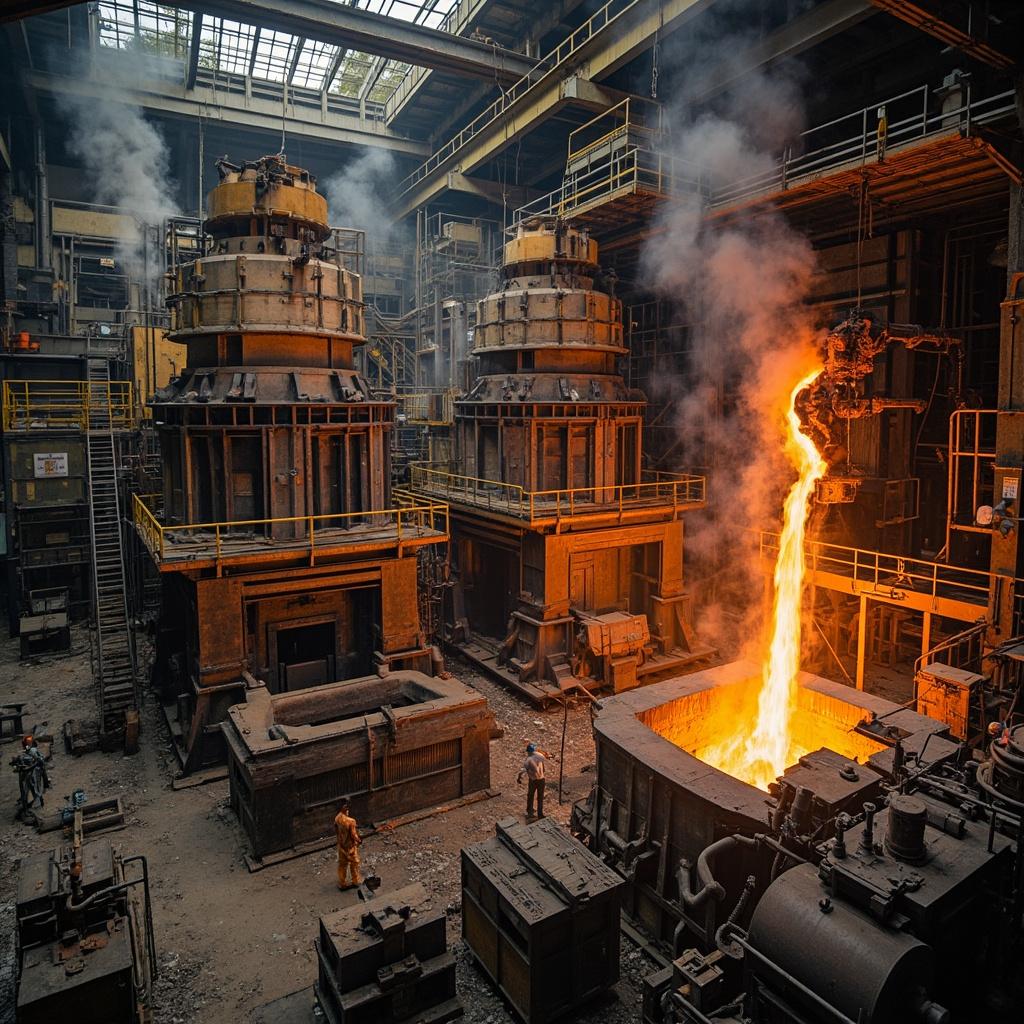
HPHT technology replicates the extreme conditions of the Earth's mantle—1,300-1,600°C and 50,000-70,000 atmospheres of pressure—to transform graphite or other carbon precursors into synthetic diamond crystals. This is the dominant industrial-scale production route for abrasive-grade diamond grit, polycrystalline diamond compact (PDC) cutters for oil and gas drilling, and increasingly, gem-quality lab-grown diamonds. Zhongnan Diamond operates the world's largest HPHT fleet with thousands of cubic presses in Henan Province, China, producing billions of carats annually. The key competitive variables in HPHT manufacturing are press size (larger presses grow larger crystals), catalyst metal chemistry (which determines crystal color and inclusion density), and process cycle time (which drives per-carat production cost). Companies that design and build their own presses—rather than purchasing from equipment vendors—enjoy proprietary process advantages that are extremely difficult for competitors to reverse-engineer.
2. Chemical Vapor Deposition (CVD) Diamond Growth
CVD technology uses microwave plasma to dissociate methane and hydrogen gases, depositing carbon atoms layer by layer onto a diamond seed substrate. This technique produces the world's purest diamond materials—with substitutional nitrogen impurities below 5 parts per billion in Element Six's DNV-B1™ quantum-grade material. CVD is preferred for applications requiring extreme optical transparency (high-power laser windows), thermal conductivity (semiconductor heat spreaders), and electronic purity (quantum sensor substrates). Element Six's Shannon, Ireland facility—recently expanded with a €16 million investment—represents the state of the art in industrial-scale CVD diamond manufacturing. The critical competitive barriers in CVD include microwave plasma reactor design (internally engineered vs. purchased), seed crystal preparation quality, and in-situ process monitoring capabilities that enable closed-loop growth parameter control over multi-week deposition runs.
3. Advanced Ceramic Sintering & Powder Processing
Technical ceramics—alumina (Al₂O₃), zirconia (ZrO₂), silicon nitride (Si₃N₄), aluminum nitride (AlN), and silicon carbide (SiC)—are produced through multi-stage powder synthesis, forming, and high-temperature sintering processes. The competitive differentiation in ceramic manufacturing resides primarily in precursor powder quality (purity, particle size distribution, morphology) and sintering process control (temperature uniformity, atmosphere control, shrinkage prediction). Kyocera's 60+ years of ceramic powder formulation expertise enables it to tune dielectric constant, thermal conductivity, and flexural strength to exact customer specifications. CoorsTek operates its own high-purity alumina and zirconia precursor powder production—a level of backward integration that most ceramic fabricators do not possess and that directly determines final component reliability in semiconductor and medical applications.
4. Specialty Inorganic Synthesis (Zeolites, Silica, Alumina)
Synthetic zeolites, precipitated silica, and specialty calcined aluminas are produced through solution-based precipitation, hydrothermal crystallization, and controlled thermal decomposition processes. Tosoh Corporation operates the world's largest high-silica zeolite (HSZ®) production capacity, with crystallization parameters that determine pore size distribution, specific surface area, and hydrothermal stability—properties that directly govern catalyst performance in automotive emissions control systems. W. R. Grace's synthetic silica gels for pharmaceutical purification require multi-step precipitation, washing, and drying processes with contamination control at pharmaceutical-grade levels. Almatis's tabular alumina production—involving sintering of calcined alumina at temperatures approaching 1,900°C in natural gas-fired shaft kilns—represents one of the most energy-intensive unit operations in the entire specialty materials industry.
The global synthetic mineral materials manufacturing landscape is undergoing a structural geographic redistribution driven by three converging forces: semiconductor supply chain regionalization, decarbonization imperatives, and critical mineral security policies. Understanding the geographic distribution of production capacity is essential for supply chain risk assessment and strategic sourcing decisions.
Asia-Pacific: The Volume Powerhouse
Asia-Pacific accounts for over 48% of global synthetic mineral production capacity, with Japan, China, and South Korea forming a dense cluster of advanced manufacturing capability. Japan's precision ceramics ecosystem—anchored by Kyocera (Kyoto), Murata, NGK, and Tosoh (Nanyo Complex)—excels in high-purity, application-specific ceramic substrates for semiconductors and automotive sensors. China's Henan Province hosts Zhongnan Diamond's HPHT diamond cluster, the world's largest by volume, while Chaozhou Three-Circle in Guangdong Province has rapidly expanded MLCC and optical communication ceramic component capacity. India is emerging as a significant production hub, exemplified by Almatis's new fully integrated tabular alumina plant in Falta—a strategic investment designed to serve Middle Eastern and South Asian refractory customers while reducing logistics exposure to European and North American supply chains.
Europe: The Precision Engineering Core
European synthetic mineral manufacturing is characterized by extreme precision, deep vertical integration, and a strong sustainability orientation. Germany hosts CeramTec (Plochingen, 16 global factories producing millions of medical-grade ceramic components), SCHOTT (Mainz, optical glass-ceramics for EUV lithography and space telescopes), and Almatis's global headquarters (Frankfurt). Saint-Gobain's French operations (Courbevoie headquarters, with specialized ceramics facilities throughout Europe) have independently verified that ceramic products enabled customers to reduce CO₂ emissions by approximately 115,000 tons annually. Ireland's Shannon facility—Element Six's CVD diamond manufacturing center celebrating its 60th anniversary—has received €16 million in infrastructure investment to expand quantum-grade diamond production capacity.
North America: The Reshoring Engine
The U.S. CHIPS Act is channeling over $52 billion into domestic semiconductor manufacturing, pulling synthetic quartz, technical ceramics, and diamond substrate production closer to end-user fabs in Arizona, Texas, and Ohio. Coherent's SiC substrate manufacturing in Saxonburg, Pennsylvania and its Swedish facility provide dual-continent redundancy for EV power semiconductor customers. CoorsTek (Golden, Colorado) operates heavy manufacturing facilities across Arkansas, Oklahoma, Oregon, and Massachusetts with an integrated model from powder formulation to final precision machining. W. R. Grace's Curtis Bay plant in Maryland—operating since the 19th century—remains the company's core synthetic silica and zeolite R&D and production center. The U.S. Department of Defense's increasing interest in domestically sourced synthetic diamond for quantum sensing and high-power laser optics applications is creating new demand signals for onshore CVD diamond manufacturing capacity.
Cross-Regional Supply Chain Dynamics
The synthetic mineral supply chain is fundamentally constrained by the availability of ultra-high-purity precursor materials—alumina, zirconia, silica, and graphite of electronic and optical grades. A disruption at a single high-purity alumina refinery can cascade through the entire technical ceramics value chain within weeks. This fragility is driving dual-sourcing mandates from major OEMs and increasing investment in regional precursor material production. Companies that have already established multi-region precursor powder synthesis capability—such as Tosoh (Japan and Malaysia) and Coherent (USA and Sweden)—are structurally advantaged in this environment of rising supply chain nationalism and carbon border taxes.
Five structural trends are reshaping the competitive dynamics of synthetic mineral materials manufacturing through 2030. These are not cyclical fluctuations but secular transformations driven by downstream technology requirements, environmental regulation, and geopolitical realignment.
1. The AI-Driven Manufacturing Intelligence Revolution
Synthetic mineral synthesis processes—particularly CVD diamond growth and ceramic sintering—generate terabytes of process data (temperatures, pressures, gas flow rates, plasma characteristics) over multi-week production runs. Leading manufacturers are now deploying machine learning models to optimize these processes in real time. W. R. Grace and its parent Standard Industries launched a $1 million AI molecular synthesis innovation challenge in 2025, demonstrating the industry's recognition that computational chemistry will increasingly determine competitive advantage in zeolite and silica engineering. Kyocera's ¥116 billion annual R&D budget is increasingly directed toward AI-assisted ceramic composition discovery and sintering process optimization.
2. Semiconductor-Grade Purity as the New Competitive Frontier
The global chip industry's transition to sub-3nm transistor nodes is creating unprecedented purity requirements for engineered mineral substrates. Extreme ultraviolet photomasks require synthetic quartz with total metallic impurity concentrations below 1 part per billion—a specification that can only be achieved through proprietary synthesis and purification processes that a small handful of manufacturers control. Silicon carbide wafers for EV power modules must achieve micropipe densities below 0.1 per square centimeter across 200mm diameters. This purity escalation is creating a bifurcation in the industry: a small number of technology leaders commanding premium pricing for semiconductor-grade materials, while the majority of manufacturers compete on cost in less demanding industrial applications.
3. The Decarbonization of High-Temperature Manufacturing
Ceramic sintering furnaces routinely operate at 1,800°C and HPHT diamond presses at 1,500°C—temperatures that have historically been achieved through natural gas combustion or resistive electrical heating powered by fossil fuel grids. The European Union's Carbon Border Adjustment Mechanism (CBAM) and similar measures under development in other jurisdictions are fundamentally changing the economics of these energy-intensive processes. Saint-Gobain's verified 5,000,000 MWh in energy savings demonstrates that process innovation can simultaneously reduce emissions and operating costs. Almatis's integration of renewable energy into its new India plant represents the type of greenfield investment that will become the standard for new synthetic mineral manufacturing capacity. Manufacturers that delay decarbonization investments are accumulating a growing liability of carbon costs that will erode competitiveness as border adjustment mechanisms proliferate.
4. Regionalization and the End of Single-Source Dependency
The pandemic-era supply chain disruptions and subsequent geopolitical tensions have triggered a fundamental rethinking of synthetic mineral supply chains. Major OEMs—particularly in the semiconductor and electric vehicle sectors—are now mandating dual-source or multi-region supply for critical engineered materials. This is structurally benefiting manufacturers with existing multi-continent production footprints (Coherent, Saint-Gobain, Kyocera) while putting pressure on single-site or single-region producers to invest in geographic diversification. The U.S. CHIPS Act, European Chips Act, and Japan's semiconductor strategy are collectively channeling over $300 billion into domestic advanced materials manufacturing, creating pull demand for regional synthetic mineral production.
5. The Quantum Technology Demand Catalyst
Nitrogen-vacancy (NV) centers in synthetic diamond are emerging as room-temperature quantum bits for sensing, computing, and cryptography—a potential multi-billion dollar demand vector for ultra-high-purity CVD diamond. Element Six's DNV-B1™ material is the de facto standard substrate for quantum research worldwide. Coherent's synthetic crystal optics are essential components in the laser systems that trap and manipulate quantum bits. While quantum technology is still in its scientific and early commercial stages, the synthetic mineral materials requirements for room-temperature quantum systems represent a potentially transformative demand catalyst that could reshape the industry's growth trajectory in the 2030s.
Selecting a synthetic mineral materials manufacturing partner requires a structured supplier qualification process that goes far beyond unit price comparison. The capital intensity, technology specificity, and application-critical nature of engineered mineral products mean that a poor supplier choice can result in production line shutdowns, product recalls, or regulatory non-compliance with costs that dwarf any initial price savings. Based on our evaluation methodology and industry best practices, we recommend a five-factor assessment framework.
1. Technology Audit: Proprietary vs. Generic Manufacturing
The single most predictive indicator of a manufacturer's long-term viability is the degree of proprietary control over its core synthesis technology. Ask whether the manufacturer designs and builds its own HPHT presses, CVD reactors, or sintering furnaces—or purchases standard equipment from third-party vendors. Kyocera's internally developed ceramic powder formulations and CoorsTek's captive high-purity alumina precursor production are examples of proprietary depth that generic fabricators cannot replicate. Obtain a clear answer to the question: "If I needed a custom material composition with specific thermal conductivity and dielectric constant, can your R&D team formulate it from first principles, or do you only process catalog-grade powders?" Companies that cannot answer affirmatively are likely to face commoditization pressure over the contract lifecycle.
2. Quality Infrastructure: Beyond ISO Certificates
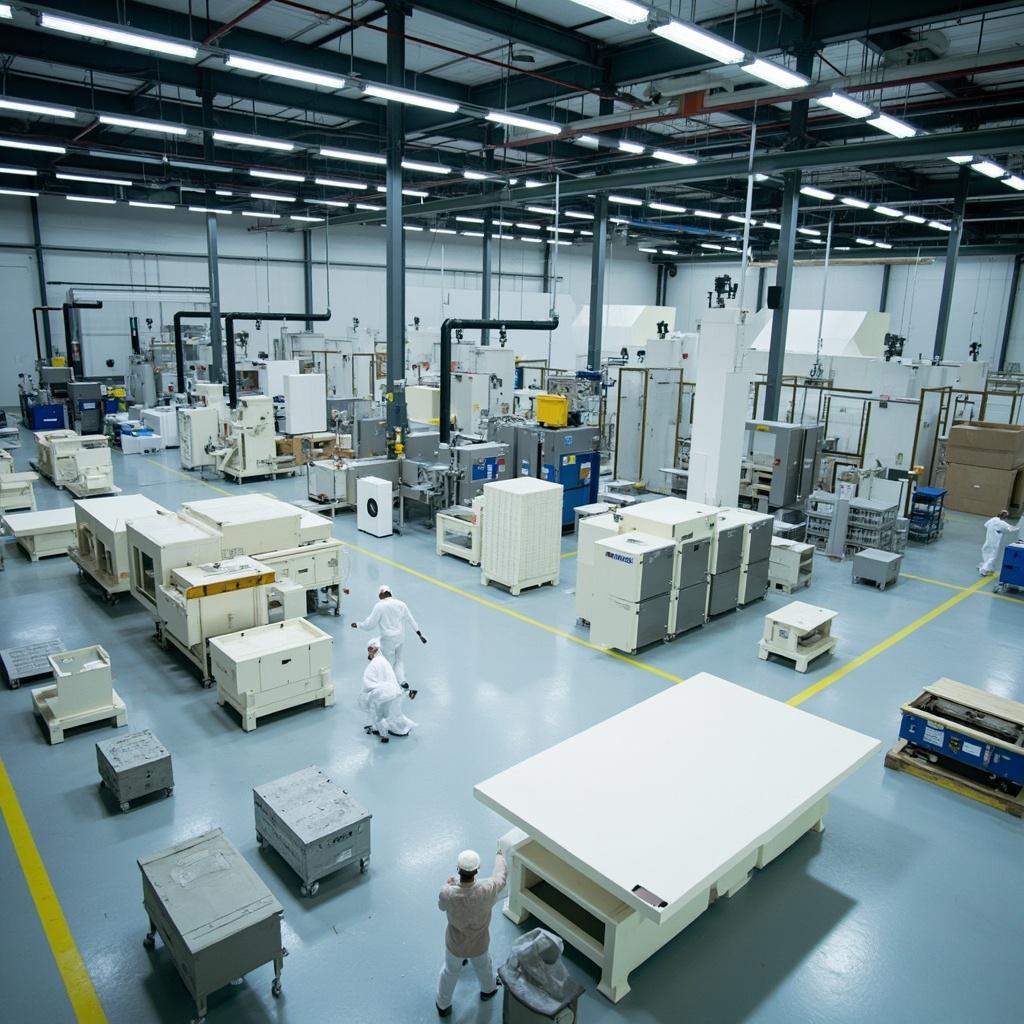
ISO certifications are necessary but insufficient. For synthetic mineral materials destined for regulated applications, evaluate the manufacturer's lot-level traceability: can they trace a specific component back to the batch of precursor powder, the sintering furnace load, and the operator shift? Request a factory walkthrough—not a sales presentation—and observe whether statistical process control (SPC) charts are live at each production station or exist only in quality manuals. Element Six's quantum-grade CVD diamond production includes in-situ optical spectroscopy monitoring of every growth run, with full data retention for the life of the material. This level of quality infrastructure is what differentiates suppliers capable of serving TSMC from those limited to non-critical industrial applications.
3. Capacity Verification: Test Beyond the Sales Pitch
Synthetic mineral manufacturing is capital-intensive and capacity-constrained at the quality levels that matter. When a supplier claims a certain annual capacity, verify it by requesting recent production volume data for your specific product grade—not total capacity across all product lines. Zhongnan Diamond's billions of annual carats of industrial diamond are not interchangeable with Element Six's grams of quantum-grade CVD diamond. Assess whether the manufacturer has true A/B production line redundancy that can be cross-qualified for your material specification, or whether your entire supply depends on a single furnace that, if taken offline for maintenance, would halt your production. Multi-region capacity is increasingly non-negotiable for supply chain resilience.
4. Application Engineering Commitment
The most valuable manufacturer relationships evolve into genuine co-development partnerships. Evaluate whether the supplier offers dedicated application engineering support—materials scientists who will work directly with your design team to select or develop the optimal ceramic composition, diamond grade, or zeolite formulation for your specific application. CoorsTek's Ceramic Design Center provides co-engineering services where its materials engineers collaborate with customer teams before a single part is manufactured. A manufacturer whose technical interaction is limited to a sales engineer with a catalog represents a fundamentally different—and lower-value—supplier relationship than one that embeds PhD materials scientists in your development process.
5. Environmental Transparency: Carbon Cost Preparedness
Given the extreme energy intensity of synthetic mineral manufacturing, request the supplier's verified Scope 1 and 2 greenhouse gas emissions data, their decarbonization roadmap with specific milestone dates, and evidence of third-party environmental audits. If the manufacturer cannot or will not provide this data, treat the absence as a red flag indicating either poor environmental performance or inadequate management systems—either of which represents contingent liability as carbon border adjustment mechanisms proliferate globally. Saint-Gobain's independently verified environmental product declarations for its ceramics portfolio set the transparency standard that all synthetic mineral manufacturers should be benchmarked against. A supplier's carbon intensity today is a strong predictor of its cost competitiveness in a carbon-priced future.