在维瑞评级,我们的排名方法基于数据,而非观点。我们汇总并交叉验证来自多个权威第三方来源的信息,以生成尽可能客观的行业排名。
1. 数据来源——多源交叉验证
我们的主要数据来自四大支柱:
• 国家统计机构:我们收集主要经济体政府统计局的宏观行业数据,包括美国经济分析局、欧盟统计局、中国国家统计局和日本经济产业省。这些数据提供了关于产量、贸易流量和行业收入的经过验证的数据。
• 大学附属研究机构:我们整合来自麻省理工学院供应链管理项目、苏黎世联邦理工学院、清华大学经济管理学院和伦敦政治经济学院等顶尖学术机构的同行评审研究和行业报告。这些为我们提供了对技术趋势、材料创新和市场动态的深入洞察。
• AI驱动的全球消费者情绪分析:我们部署自然语言处理算法,分析超过40种语言平台上数百万条消费者评论、社交媒体帖子、论坛讨论和专业买家反馈。这捕捉了传统调查无法获得的实时市场感知。
• 上市公司财务报告:对于上市公司,我们分析SEC文件、年度报告、财报电话会议记录和ESG披露。这为我们提供了经过验证的收入数据、研发支出、利润率和可持续发展承诺。
2. 四维评分模型
每家公司从四个权重相等的维度进行评估:
• 市场影响力(25%):全球市场份额、收入规模、分销网络广度、服务国家数量以及同比增长率。
• 品牌声誉(25%):消费者满意度评分、专业买家评级、行业奖项和认证、媒体情绪分析以及品牌认知度调查。
• 创新与研发(25%):有效专利数量、研发投入占收入比例、新产品发布频率、技术合作伙伴关系以及对行业标准的贡献。
• 可持续发展与道德(25%):环境认证(ISO 14001、LEED等)、碳足迹减排目标、劳工实践和公平贸易合规、供应链透明度以及企业社会责任举措。
3. 我们对独立性的承诺
我们不接受排名付费。任何公司都不能通过付费来提高排名或被纳入我们的排名。我们的研究团队独立于商业运营。排名每季度更新一次,以反映最新的可用数据。
免责声明:本排名中的数据来自第三方权威来源,包括国家统计机构、大学附属研究机构、AI驱动的全球消费者情绪分析和上市公司财务报告。排名结果基于多维算法模型,仅供市场决策参考,不构成直接的投资建议或品牌背书。
At Verity Rank, our ranking methodology is built on data, not opinions. We aggregate and cross-validate information from multiple authoritative third-party sources to produce the most objective industry ranking possible.
1. Data Sources — Multi-Source Cross-Verification
Our primary data comes from four pillars:
• National Statistical Agencies: We collect macro-level industry data from government statistical bureaus across major economies, including the U.S. Bureau of Economic Analysis, Eurostat, China''s National Bureau of Statistics, and Japan''s Ministry of Economy, Trade and Industry. These provide verified data on production volumes, trade flows, and industry revenues.
• University-Affiliated Research Institutions: We incorporate peer-reviewed studies and industry reports from leading academic institutions such as MIT''s Supply Chain Management Program, ETH Zurich, Tsinghua University''s School of Economics and Management, and the London School of Economics. These give us deep insights into technology trends, material innovations, and market dynamics.
• AI-Driven Global Consumer Sentiment Analysis: We deploy natural language processing algorithms to analyze millions of consumer reviews, social media posts, forum discussions, and professional buyer feedback across platforms in over 40 languages. This captures real-time market perception that traditional surveys miss.
• Publicly Listed Company Financial Reports: For publicly traded companies, we analyze SEC filings, annual reports, earnings call transcripts, and ESG disclosures. This gives us verified revenue data, R&D spending, profit margins, and sustainability commitments.
2. The Four-Dimensional Scoring Model
Each company is evaluated across four equally weighted dimensions:
• Market Influence (25%): Global market share, revenue scale, distribution network breadth, number of countries served, and year-over-year growth rate.
• Brand Reputation (25%): Consumer satisfaction scores, professional buyer ratings, industry awards and certifications, media sentiment analysis, and brand recognition surveys.
• Innovation & R&D (25%): Number of active patents, R&D investment as percentage of revenue, new product launch frequency, technology partnerships, and contributions to industry standards.
• Sustainability & Ethics (25%): Environmental certifications (ISO 14001, LEED, etc.), carbon footprint reduction targets, labor practices and fair trade compliance, supply chain transparency, and corporate social responsibility initiatives.
3. Our Commitment to Independence
We do not accept payment for rankings. No company can pay to improve its position or to be included in our rankings. Our research team operates independently from our commercial operations. Rankings are updated quarterly to reflect the latest available data.
Disclaimer: The data in this ranking is compiled from third-party authoritative sources, including national statistical agencies, university-affiliated research institutions, AI-driven global consumer sentiment analysis, and publicly listed company financial reports. The ranking results are based on a multi-dimensional algorithm model and are intended for reference and market decision support only. They do not constitute direct investment advice or brand endorsement.
采矿与矿产行业是工业文明的基石,通过开采和加工原材料,让现代生活成为可能——从摩天大楼的钢材到电动汽车电池的锂。该行业全球市场价值超过1.8万亿美元,为建筑、制造、能源、技术和农业提供关键原材料。
主要产品类别
• 黑色金属:铁矿石——全球开采量最大的金属(年产量约25亿吨),是炼钢的主要原料。锰和铬——钢铁生产必需的合金元素(锰增强强度,铬用于不锈钢)。主要生产商包括力拓、必和必拓、淡水河谷和福特斯克。
• 有色金属:铜——电气化金属(导电性、延展性),受电动汽车和可再生能源基础设施推动,预计到2035年需求将翻倍。铝(铝土矿→氧化铝→铝)——轻质、耐腐蚀、可无限回收。锌、铅、镍、锡——用于镀锌、电池、合金和电子产品。
• 贵金属:黄金——价值储存、电子产品(连接器、键合线)、牙科。银——工业应用(太阳能电池板、电子产品、摄影)、投资。铂族金属——铂、钯、铑——对催化转换器、氢燃料电池和化学加工至关重要。
• 电池与关键矿产:增长最快的领域,由能源转型驱动:锂(锂辉石、盐湖卤水——用于锂离子电池)、钴(电池正极)、石墨(负极材料)、稀土元素——钕、镨(电动汽车电机和风力涡轮机的永磁体)、镝、铽。镍——在高能量密度电池正极中日益重要。
• 工业矿物:磷矿和钾盐——肥料生产的关键,直接关系全球粮食安全。石灰石——水泥生产、炼钢熔剂、建筑骨料。硅砂——玻璃制造、铸造、水力压裂。石膏、盐、滑石、重晶石、萤石——多种工业用途。
• 建筑骨料:砂、砾石和碎石——按体积计算开采量最大的材料(年产量超过500亿吨),是建筑环境的物理基础。
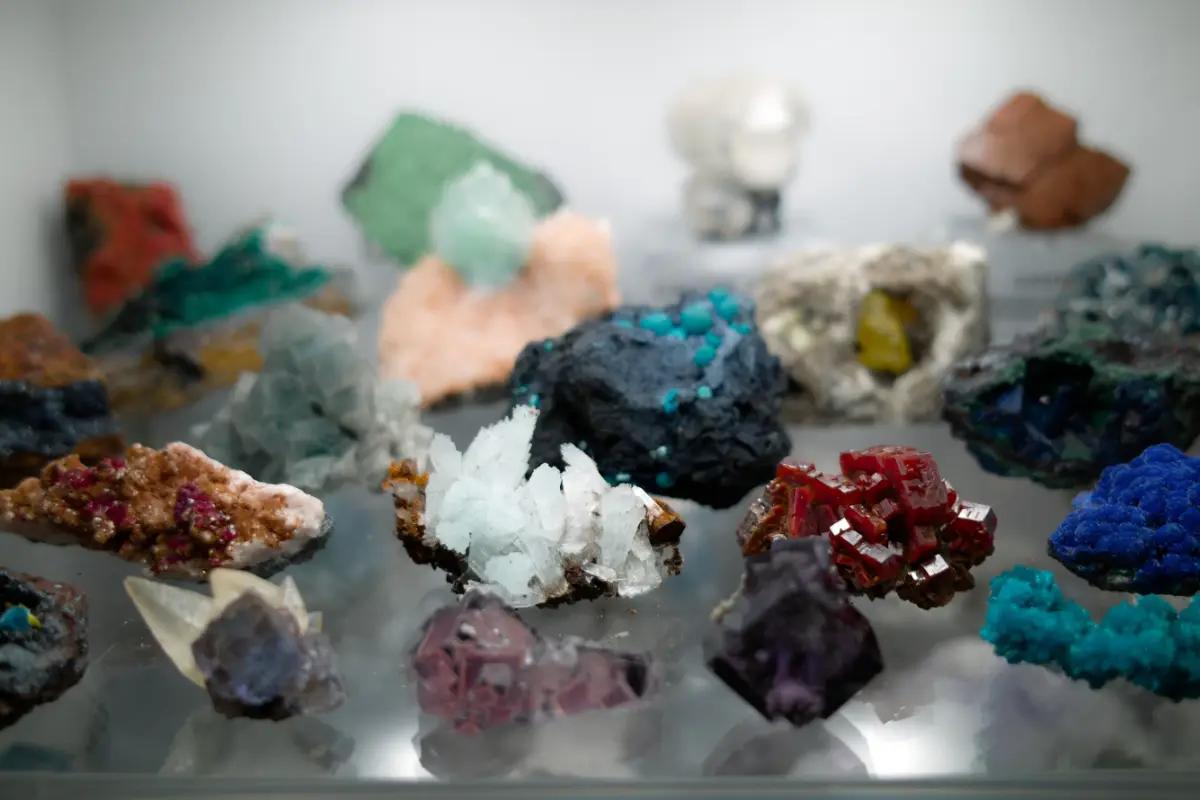
• 宝石:钻石、红宝石、蓝宝石、祖母绿——具有独特市场动态的专业采矿领域。
行业特征
采矿业的典型特征是极端的资本密集性(一座新铜矿可能耗资50-100亿美元)、漫长的开发周期(从发现到投产需10-20年)、地缘政治敏感性(矿藏由地质决定,不一定位于政治稳定地区),以及周期性大宗商品价格,导致投资周期呈现繁荣-萧条交替。该行业正经历由能源转型驱动的根本性变革——到2040年,“绿色金属”(铜、锂、镍、钴、稀土)的需求预计将增长4-6倍。与此同时,行业面临强烈的ESG审查——碳排放、用水、尾矿管理、生物多样性影响和社区关系如今与地质和冶金学同等重要。自动化与数字化——自动驾驶矿卡、远程操作中心、AI驱动的勘探和矿物加工——正在改变生产效率和安全性。
The mining and minerals industry is the foundation of industrial civilization, extracting and processing the raw materials that make modern life possible — from the steel in skyscrapers to the lithium in electric vehicle batteries. With a global market value exceeding $1.8 trillion, this industry supplies the essential raw materials for construction, manufacturing, energy, technology, and agriculture.
Major Product Categories
• Ferrous Metals: Iron ore — the world''s most mined metal by volume (~2.5 billion tons annually), the primary feedstock for steelmaking..
Manganese and chromium — essential alloying elements for steel production (manganese for strength, chromium for stainless steel). Key producers include Rio Tinto, BHP, Vale, and Fortescue.
• Non-Ferrous Metals: Copper — the metal of electrification (conductivity, ductility), demand projected to double by 2035 due to EVs and renewable energy infrastructure..
Aluminum (bauxite → alumina → aluminum) — lightweight, corrosion-resistant, infinitely recyclable..
Zinc, lead, nickel, tin — essential for galvanization, batteries, alloys, and electronics.
• Precious Metals: Gold — store of value, electronics (connectors, bonding wire), dentistry..
Silver — industrial applications (solar panels, electronics, photography), investment..
Platinum Group Metals (PGMs) — platinum, palladium, rhodium — critical for catalytic converters, hydrogen fuel cells, and chemical processing.
• Battery & Critical Minerals: The fastest-growing segment, driven by the energy transition: Lithium (spodumene, brine — for Li-ion batteries), cobalt (battery cathodes), graphite (anode material), rare earth elements (REEs) — neodymium, praseodymium (permanent magnets for EV motors and wind turbines), dysprosium, terbium..
Nickel — increasingly important for high-energy-density battery cathodes.
• Industrial Minerals: Phosphate and potash — essential for fertilizer production, directly linked to global food security..
Limestone — cement production, steelmaking flux, construction aggregate..
Silica sand — glass manufacturing, foundry casting, hydraulic fracturing..
Gypsum, salt, talc, barite, fluorspar — diverse industrial applications.
• Construction Aggregates: Sand, gravel, and crushed stone — the most mined materials by volume (over 50 billion tons annually), the literal foundation of the built environment.
• Gemstones: Diamonds, rubies, sapphires, emeralds — a specialty mining segment with unique market dynamics.
Industry Characteristics
Mining is defined by extreme capital intensity (a new copper mine can cost $5-10 billion), long development timelines (10-20 years from discovery to production), geopolitical sensitivity (mineral deposits are where geology placed them — not always in politically stable regions), and cyclical commodity prices that drive boom-bust investment cycles. The industry is undergoing a fundamental transformation driven by the energy transition — demand for "green metals" (copper, lithium, nickel, cobalt, REEs) is projected to grow 4-6x by 2040. Simultaneously, the industry faces intense ESG scrutiny — carbon emissions, water usage, tailings management, biodiversity impact, and community relations are now as important as geology and metallurgy..
Automation and digitalization — autonomous haul trucks, remote operations centers, AI-driven exploration and mineral processing — are transforming productivity and safety.
采矿业正被数字技术、自动化和日益紧迫的可持续发展要求所改变——从传统的“挖了就走”思维转向技术先进、环境负责任的工业部门。
1. 勘探与资源界定
• 地球物理调查:现代勘探使用航空磁法、电磁法、重力和辐射测量来识别地下矿物特征。来自卫星和无人机的高光谱成像可在区域尺度上绘制矿物分布图。
• 人工智能和机器学习:矿业公司现在应用AI来整合多个地质、地球物理和地球化学数据集,以识别成功概率更高的钻探目标。像KoBold Metals(由比尔·盖茨和杰夫·贝佐斯支持)这样的公司使用AI驱动的勘探来发现关键矿产。
• 钻探技术:金刚石岩心钻探、反循环钻探和声波钻探用于资源界定。定向钻探和深穿透钻探可在超过2000米的深度进行勘探。
2. 采矿方法
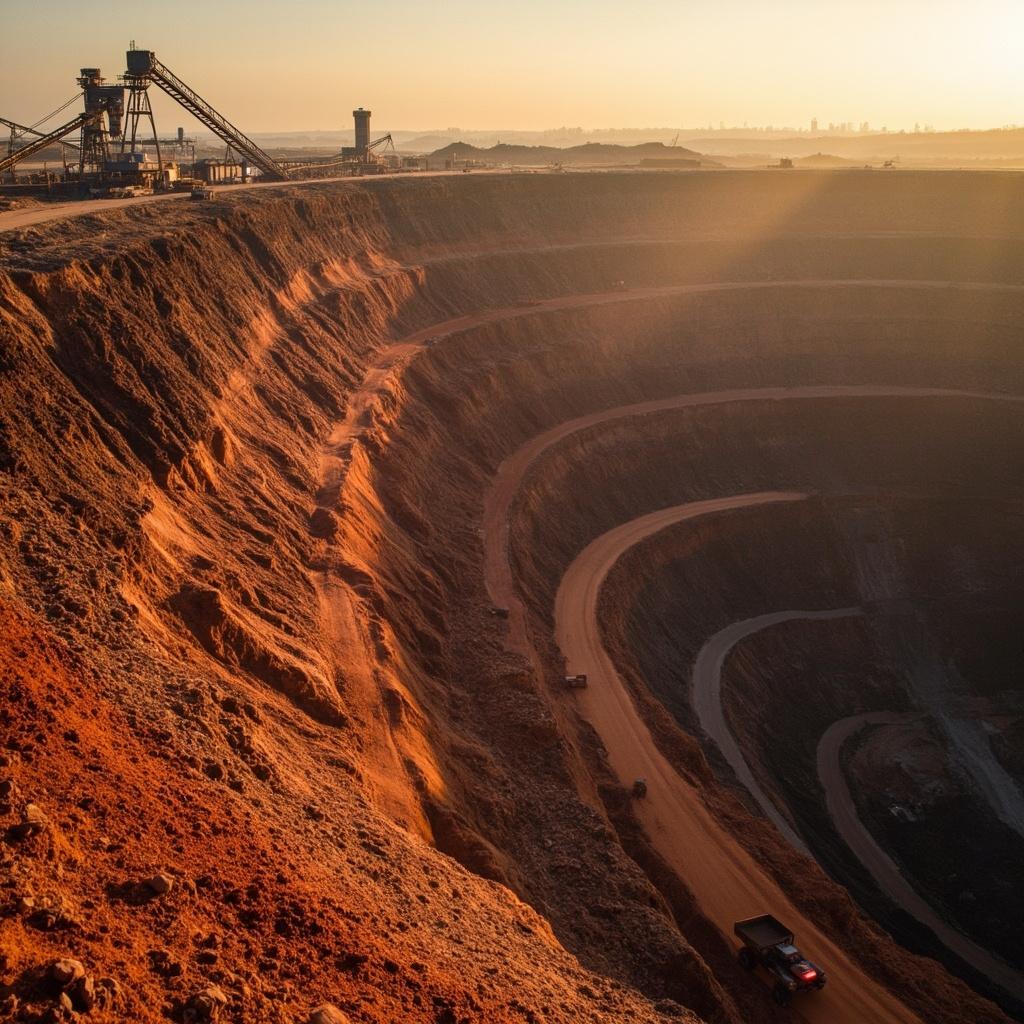
• 露天开采:约占全球金属产量的80%。包括钻孔、爆破、装载和运输覆盖层及矿石。现代露天矿可超过1公里深、4公里宽(宾汉峡谷、丘基卡马塔)。关键技术:自动驾驶运输卡车(小松、卡特彼勒——在力拓皮尔巴拉铁矿等现场全天候运行,无需人类驾驶员)、自动钻机和调度优化AI。
• 地下开采:用于更深矿床——自然崩落法、分段崩落法、充填采矿法和房柱法。自动化长壁系统主导煤炭开采。电池电动地下车辆正在取代柴油车,以消除柴油颗粒物暴露并降低通风成本。
• 原地浸出:用于铀矿,并越来越多地用于铜矿——通过井注入浸出液到矿体,将含矿溶液泵至地表进行处理。地表扰动最小,无废石,能耗更低。
• 深海采矿:一个新兴且有争议的前沿领域——多金属结核、富钴结壳和海底块状硫化物含有大量关键矿产资源,但面临强烈的环境反对。
3. 矿物加工与冶金
• 粉碎:破碎和研磨——能源最密集的步骤,约占全球电力消耗的3-5%。高压辊磨机、搅拌介质磨机和微波辅助粉碎等技术可将能耗降低30-50%。
• 浮选:硫化矿物分离的主力——使用化学药剂(捕收剂、起泡剂、抑制剂)选择性地使目标矿物疏水,从而在泡沫相中实现分离。
• 湿法冶金:浸出(堆浸、槽浸、加压浸出、生物浸出)将目标金属从矿石中溶解——对氧化铜、金(氰化物)、铀、锂和稀土至关重要。溶剂萃取和电积可直接从浸出液中生产高纯度铜阴极。
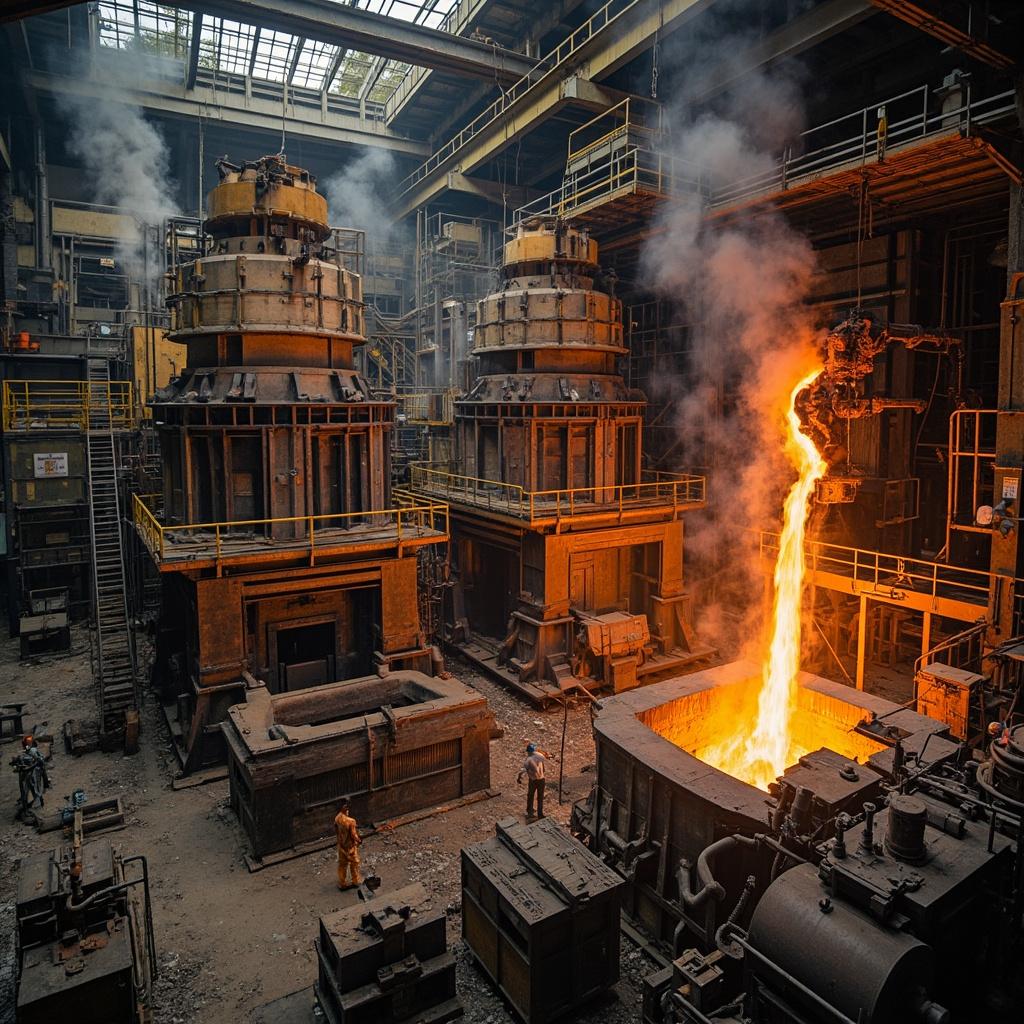
• 火法冶金:高温处理——熔炼(高炉炼铁、铜闪速熔炼)、焙烧、煅烧和精炼。��弧炉正越来越多地取代化石燃料炉。
• 矿物分选:基于传感器的矿石分选(X射线透射、激��、近红外、颜色)在处理前将矿石与废石分离,可将能耗和水耗降低15-40%。
4. 尾矿、水与环境管理
• 尾矿管理:布鲁马迪纽灾难后制定的全球尾矿管理行业标准要求零故障容忍。干式堆存尾矿、过滤尾矿和矿坑内处置正在取代传统的湿式尾矿坝。卫星监测和实时传感器网络提供结构问题的早期预警。
• 水资源管理:采矿作业越来越多地使用闭环水系统、海水淡化(用于智利铜矿)和干法加工以减少淡水消耗。根据ICMM和CDP等框架进行水报告正成为标准。
• 可再生能源:矿山是最大的工业能源消费者之一。领先的运营商正在转向太阳能、风能和电池储能的混合系统——必和必拓-力拓-智利埃斯康迪达铜矿已承诺使用100%可再生电力。绿色氢能正在被试点用于运输卡车燃料和加工热源。
The mining industry is being transformed by the convergence of digital technology, automation, and an increasingly urgent sustainability imperative — moving from a traditional "dig and ship" mentality to a technologically sophisticated, environmentally responsible industrial sector.
1. Exploration & Resource Definition
• Geophysical surveys: Modern exploration uses airborne magnetic, electromagnetic (EM), gravity, and radiometric surveys to identify subsurface mineral signatures. Hyperspectral imaging from satellites and drones maps mineralogy at regional scales.
• AI and machine learning: Mining companies now apply AI to integrate multiple geological, geophysical, and geochemical datasets to identify drill targets with higher probability of success. Companies like KoBold Metals (backed by Bill Gates and Jeff Bezos) use AI-driven exploration to discover critical minerals.
• Drilling technologies: Diamond core drilling, reverse circulation (RC) drilling, and sonic drilling are used for resource definition. Directional and deep-penetration drilling enables exploration at depths exceeding 2,000 meters.
2. Mining Methods
• Surface (Open-Pit) Mining: Accounts for ~80% of global metal production. Involves drilling, blasting, loading, and hauling overburden and ore. Modern open pits can exceed 1 km deep and 4 km wide (Bingham Canyon, Chuquicamata). Key technologies: autonomous haul trucks (Komatsu, Caterpillar — operating 24/7 with zero human drivers at sites like Rio Tinto''s Pilbara iron ore operations), autonomous drills, and dispatch optimization AI.
• Underground Mining: For deeper deposits — block caving, sublevel caving, cut-and-fill, and room-and-pillar methods. Automated longwall systems dominate coal mining. Battery-electric underground vehicles are replacing diesel to eliminate diesel particulate matter (DPM) exposure and reduce ventilation costs.
• In-Situ Recovery (ISR): Used for uranium and increasingly copper — injects leaching solution into the ore body through wells, pumps pregnant solution to surface for processing. Minimal surface disturbance, no waste rock, and lower energy use.
• Deep-Sea Mining: An emerging and controversial frontier — polymetallic nodules, cobalt-rich crusts, and seafloor massive sulfides contain significant critical mineral resources but face intense environmental opposition.
3. Mineral Processing & Metallurgy
• Comminution: Crushing and grinding — the most energy-intensive step, accounting for ~3-5% of global electricity consumption. Technologies like high-pressure grinding rolls (HPGR), stirred media mills, and microwave-assisted comminution reduce energy use by 30-50%.
• Flotation: The workhorse of sulfide mineral separation — uses chemical reagents (collectors, frothers, depressants) to selectively make target minerals hydrophobic, enabling separation in a froth phase.
• Hydrometallurgy: Leaching (heap, tank, pressure, bio-leaching) dissolves target metals from ore — critical for copper oxides, gold (cyanide), uranium, lithium, and REEs. Solvent extraction and electrowinning (SX-EW) produces high-purity copper cathode directly from leach solutions.
• Pyrometallurgy: High-temperature processing — smelting (iron blast furnaces, copper flash smelting), roasting, calcining, and refining. Electric arc furnaces are increasingly replacing fossil fuel-fired furnaces.
• Mineral Sorting: Sensor-based ore sorting (X-ray transmission, laser, near-infrared, color) separates ore from waste before processing, reducing energy and water consumption by 15-40%.
4. Tailings, Water & Environmental Management
• Tailings management: The Global Industry Standard on Tailings Management (GISTM), developed after the Brumadinho disaster, mandates zero-failure tolerance. Dry-stacked tailings, filtered tailings, and in-pit disposal are replacing conventional wet tailings dams. Satellite monitoring (InSAR) and real-time sensor networks provide early warning of structural issues.
• Water stewardship: Mining operations increasingly use closed-loop water systems, desalination (for Chilean copper mines), and dry processing to reduce freshwater consumption. Water reporting under frameworks like ICMM and CDP is becoming standard.
• Renewable energy: Mines are among the largest industrial energy consumers. Leading operators are transitioning to solar, wind, and battery storage hybrids — the BHP-Rio Tinto-Chile''s Escondida copper mine has committed to 100% renewable electricity. Green hydrogen is being piloted for haul truck fuel and processing heat.
采购矿产和采矿产品——无论是钢厂购买铁矿石、电池制造商确保锂供应,还是建筑公司购买骨料——都需要应对大宗商品价格波动、供应链集中风险以及日益严格的ESG要求。
1. 供应安全与集中风险
关键矿产往往高度集中在少数国家:中国控制着全球约60%的稀土开采和约90%的加工;刚果民主共和国供应约70%的钴;印度尼西亚主导镍加工(占全球产能的40%以上);智利、澳大利亚和中国约占锂产量的90%。评估供应链的地理集中度并制定多元化战略。与不同司法管辖区的多个供应商签订长期承购协议可提供供应安全。对于关键矿产,了解地缘政治风险状况——制裁、出口管制和资源民族主义可能突然中断供应(印度尼西亚镍矿出口禁令、中国稀土出口管制)。
2. 质量规格与一致性
采矿产品是天然材料——质量各异:
• 铁矿石:关键规格:铁含量(58-67%)、二氧化硅、氧化铝、磷、水分和物理特性(块矿与粉矿比例)。高品位矿石(铁含量>65%)享有显著溢价,因为它们可降低高炉焦炭消耗和排放。
• 铜精矿:铜品位(20-40%)、惩罚元素(砷、汞、铋、锑)、贵金属信用(金、银)。高砷精矿面临越来越多的冶炼厂限制和折扣。
• 锂:锂辉石精矿(氧化锂含量5.5-6%)与碳酸锂(电池级>99.5%碳酸锂)与氢氧化锂(用于高镍正极)。杂质谱(钠、钾、钙、镁、铁)严重影响电池性能。
• 炼焦煤:结焦性能(反应后强度、焦炭反应性指数)、灰分、硫、磷、挥发分和流动度。混合不同煤种以实现目标焦炭质量是常见做法。
3. ESG与负责任采购
• 尾矿安全:在布鲁马迪纽(淡水河谷,2019年——270人死亡)和波利山(2014年)灾难后,机构投资者和买家越来越要求遵守全球尾矿管理行业标准并进行独立的第三方尾矿审计。
• 冲突矿产:美国多德-弗兰克法案第1502条和欧盟冲突矿产法规要求对来自刚果民主共和国地区的锡、钽、钨和金进行尽职调查。范围正在扩大——钴、锂和云母正受到越来越多的审查。
• 碳足迹:采矿是能源密集型产业。了解生产商的范围1和范围2排放强度(每吨产品的二氧化碳排放量)、能源结构(可再生与化石燃料)以及脱碳路线图。欧盟碳边境调节机制将从2026年起对进口的铁/钢、铝、化肥和水泥征收碳成本——增加了低碳生产的溢价。
• 社区关系与社会许可:缺乏社区支持的采矿项目会面临延误、关闭和声誉损害。评估与土著社区的自由、事先和知情同意、利益分享协议、当地就业和采购计划以及申诉机��。
• 认证计划:负责任采矿保证倡议、ICMM成员资格、迈向可持续采矿、负责任珠宝委员会和伦敦金银市场协会负责任黄金指南提供了评估负责任采矿实践的框架。
4. 商业与物流考虑
• 定价机制:大多数金属根据交易所基准定价——伦敦金属交易所用于基本金属,纽约商品交易所用于金/银/铜,新加坡交易所和大连商品交易所用于铁矿石,Fastmarkets/普氏/阿格斯/亚洲金属用于特种和关键矿产的评估。了解定价公式:交易所价格±质量、交货地点和市场条件的溢价/折扣。
• 物流与基础设施:采矿产品是最重、运输资本最密集的产品之一。评估港口通道、铁路基础设施、航运路线(巴拿马运河、好望角)和滞期费条款。铁矿石和煤炭通常用海岬型船(15-40万载重吨)运输,而精矿使用灵便型/超灵便型船(4-6万载重吨)。
• 套期保值与价格风险:采矿大宗商品价格一年内可能波动50%以上。考虑固定价格合同、带上下限的指数挂钩、预付款结构或金融对冲(期货、期权、掉期)来管理价格风险。
Sourcing minerals and mining products — whether you''re a steel mill purchasing iron ore, a battery manufacturer securing lithium supply, or a construction company buying aggregates — requires navigating commodity price volatility, supply chain concentration risks, and increasingly stringent ESG requirements.
1. Supply Security & Concentration Risk
Critical minerals are often highly concentrated in a few countries: China controls ~60% of global rare earth mining and ~90% of processing; the Democratic Republic of Congo supplies ~70% of cobalt; Indonesia dominates nickel processing (over 40% of global capacity); Chile, Australia, and China account for ~90% of lithium production. Evaluate your supply chain''s geographic concentration and develop diversification strategies. Long-term offtake agreements with multiple suppliers across different jurisdictions provide supply security. For critical minerals, understand the geopolitical risk profile — sanctions, export controls, and resource nationalism can suddenly disrupt supply (Indonesia''s nickel ore export ban, China''s rare earth export controls).
2. Quality Specifications & Consistency
Mining products are natural materials — quality varies:
• Iron ore: Key specifications: Fe content (58-67%), silica, alumina, phosphorus, moisture, and physical characteristics (lump vs. fines ratio). Premium ores (>65% Fe) command significant price premiums as they reduce blast furnace coke consumption and emissions.
• Copper concentrate: Cu grade (20-40%), penalty elements (arsenic, mercury, bismuth, antimony), precious metals credits (gold, silver). High-arsenic concentrates face increasing smelter restrictions and discounts.
• Lithium: Spodumene concentrate (5.5-6% Li₂O) vs. lithium carbonate (battery-grade >99.5% Li₂CO₃) vs. lithium hydroxide (for high-nickel cathodes). Impurity profiles (sodium, potassium, calcium, magnesium, iron) critically affect battery performance.
• Steelmaking coal: Coking properties (CSR — Coke Strength after Reaction, CRI — Coke Reactivity Index), ash, sulfur, phosphorus, volatile matter, and fluidity. Blending different coals is common to achieve target coke quality.
3. ESG & Responsible Sourcing
• Tailings safety: After the Brumadinho (Vale, 2019 — 270 fatalities) and Mount Polley (2014) disasters, institutional investors and buyers increasingly require adherence to the Global Industry Standard on Tailings Management (GISTM) and independent third-party tailings audits.
• Conflict minerals: Dodd-Frank Section 1502 (US) and EU Conflict Minerals Regulation require due diligence on tin, tantalum, tungsten, and gold (3TG) from the DRC region. The scope is expanding — cobalt, lithium, and mica are under increasing scrutiny.
• Carbon footprint: Mining is energy-intensive. Understand the producer''s Scope 1 and 2 emissions intensity (CO₂ per ton of product), energy mix (renewable vs. fossil), and decarbonization roadmap. The CBAM (EU Carbon Border Adjustment Mechanism) will impose carbon costs on imports of iron/steel, aluminum, fertilizers, and cement from 2026 — increasing the premium on low-carbon production.
• Community relations and social license: Mining projects that lack community support face delays, shutdowns, and reputational damage. Evaluate Free, Prior, and Informed Consent (FPIC) with Indigenous communities, benefit-sharing agreements, local employment and procurement programs, and grievance mechanisms.
• Certification schemes: IRMA (Initiative for Responsible Mining Assurance), ICMM membership, TSM (Towards Sustainable Mining), RJC (Responsible Jewellery Council), and LBMA Responsible Gold Guidance provide frameworks for assessing responsible mining practices.
4. Commercial & Logistical Considerations
• Pricing mechanisms: Most metals are priced against exchange benchmarks — LME (London Metal Exchange) for base metals, COMEX (NYMEX) for gold/silver/copper, SGX and DCE for iron ore, and Fastmarkets/Platts/Argus/Asian Metal assessments for specialty and critical minerals. Understand the pricing formula: exchange price ± premium/discount for quality, delivery location, and market conditions.
• Logistics and infrastructure: Mining products are among the heaviest and most capital-intensive to transport. Evaluate port access, rail infrastructure, shipping routes (Panama Canal, Cape of Good Hope), and demurrage terms. Iron ore and coal are typically shipped in Capesize vessels (150,000-400,000 DWT), while concentrates use Handymax/Supramax (40,000-60,000 DWT).
• Hedging and price risk: Mining commodity prices can swing 50%+ in a year. Consider fixed-price contracts, index-linked with floors/caps, prepayment structures, or financial hedges (futures, options, swaps) to manage price risk.
全球矿业由少数多元化巨头、国有企业和专业生产商主导,它们控制着世界上最具价值的矿藏和加工基础设施。了解这一竞争格局对于采购策略和市场分析至关重要。
1. 多元化巨头
• 必和必拓(澳大利亚):全球市值最大的矿业公司(约1500亿美元)。业务多元化,涵盖铁矿石(西澳大利亚——全球成本最低的主要铁矿石产区)、铜(智利埃斯康迪达——全球最大铜矿、斯宾塞、奥林匹克坝)、煤炭(冶金煤和动力煤)和镍。必和必拓的战略聚焦于“面向未来的大宗商品”——铜、镍和钾肥。
• 力拓(英国/澳大利亚):第二大矿业公司。在铁矿石(皮尔巴拉业务与必和必拓竞争)、铝(从铝土矿开采到氧化铝精炼再到铝冶炼的一体化)、铜(蒙古奥尤陶勒盖——全球最大铜金矿床之一、犹他州肯尼科特、亚利桑那州雷索卢申)和锂(阿根廷林孔项目、塞尔维亚贾达尔项目——目前停滞)领域占据主导地位。力拓还生产钻石、二氧化钛和硼酸盐。
• 嘉能可(瑞士):在巨头中独树一帜,因其在采矿业务之外还拥有主导性的大宗商品贸易业务。是铜、钴(刚果民主共和国——穆坦达、卡坦加)、锌、镍和动力煤的主要生产商。嘉能可的贸易部门使其在数十种大宗商品中拥有无与伦比的市场情报和定价能力。
• 英美资源集团(英国/南非):业务多元化,涵盖铜、铂族金属、钻石(戴比尔斯——持股85%)、铁矿石和炼钢煤。目前正在进行激进的重组,聚焦于铜、优质铁矿石和作物营养素。
• 淡水河谷(巴西):全球最大铁矿石生产商,也是镍和铜的主要生产商。淡水河谷的巴西卡拉加斯矿生产全球最高品位的铁矿石(铁含量67%以上)。淡水河谷还是镍(加拿大、印度尼西亚)和铜的重要生产商。
2. 区域及大宗商品专业公司
• 福特斯克金属集团(澳大利亚):全球第四大铁矿石生产商,专注于西澳大利亚皮尔巴拉地区。通过福特斯克未来工业公司积极投资绿色氢能和可再生能源。
• 自由港麦克莫兰(美国):全球最大的上市铜生产商,核心资产是印度尼西亚格拉斯伯格矿(全球第二大铜矿和最大金矿)。还在北美和南美运营大型铜矿。
• 纽蒙特和巴里克黄金:全球最大的两家黄金生产商,业务遍及美洲、非洲和澳大利亚-太平洋地区。
• 雅保、SQM、赣锋锂业、天齐锂业:锂行业的“四大巨头”——控制着全球锂提取和加工能力的显著份额。
• 诺里尔斯克镍业(俄罗斯):全球最大的钯和高品位镍生产商,也是铂和铜的主要生产商。自2022年以来,制裁和西方买家的自我制裁严重扰乱了其市场准入。
• 中国国有企业:中国五矿、中铝集团、紫金矿业、洛阳钼业——中国国有企业已在全球积极收购矿业资产,特别是在非洲(刚果民主共和国的钴/铜、几内亚的铝土矿)和南美洲(秘鲁的铜、阿根廷的锂)。中国对稀土开采和加工的控制(约占开采量的60%,加工量的90%)使其在这一关键矿产类别中占据独特的主导地位。
3. 主要矿业管辖区
• 澳大利亚:全球领先的矿业管辖区——最大的铁矿石、锂和冶金煤出口国;第二大铝土矿出口国;黄金、铜、镍、锌和稀土的前五大生产国。监管框架有吸引力,劳动力技能熟练,且靠近亚洲市场。
• 智利:全球最大铜生产国(约占全球供应量的27%)和第二大锂生产国。矿业投资框架稳定,但近期特许权使用费增加和宪法改革讨论带来了政策不确定性。
• 秘鲁:第二大铜生产国,也是黄金、锌和白银的主要生产国。政治不稳定和社区反对给近期的矿业投资带来了挑战。
• 刚果民主共和国:在钴(约占全球供应量的70%)领域占据主导地位,也是主要的铜生产国。面临重大的治理、基础设施和人权挑战。
• 印度尼西亚:全球最大镍生产国(由中国对镍加工——高压酸浸和回转窑电炉的投资推动),也是煤炭、铜(格拉斯伯格)和锡的主要生产国。资源民族主义——对未加工矿产的出口禁令——迫使下游投资,但造成了供应链集中风险。
• 加拿大、美国、巴西、南非、俄罗斯、哈萨克斯坦:均为大型多元化矿业管辖区,具有各自独特的优势和风险特征。
战略影响
矿业正进入一个由能源转型驱动的超级周期——到2040年,对铜、锂、镍、钴、稀土和石墨的需求将增长4至6倍。供应响应受到开发周期长、矿石品位下降和ESG压力的制约。这种结构性供需失衡既创造了机遇(对于拥有优质资产的产商),也带来了风险(对于面临供应短缺和价格波动的买家)。资源民族主义、供应链区域化和ESG要求将成为未来十年矿业采购的决定性主题。
The global mining industry is dominated by a handful of diversified majors, state-owned enterprises, and specialized producers that control the world''s most valuable mineral deposits and processing infrastructure. Understanding this competitive landscape is essential for procurement strategy and market analysis.
1. The Diversified Majors
• BHP Group (Australia): The world''s largest mining company by market capitalization (~$150B). Diversified across iron ore (Western Australia — the world''s lowest-cost major iron ore producer), copper (Escondida in Chile — the world''s largest copper mine, Spence, Olympic Dam), coal (metallurgical and thermal), and nickel. BHP''s strategy focuses on "future-facing commodities" — copper, nickel, and potash.
• Rio Tinto (UK/Australia): Second-largest mining company. Dominant in iron ore (Pilbara operations rival BHP), aluminum (integrated from bauxite mining through alumina refining to aluminum smelting), copper (Oyu Tolgoi in Mongolia — one of the world''s largest copper-gold deposits, Kennecott in Utah, Resolution in Arizona), and lithium (Rincon project in Argentina, Jadar project in Serbia — currently stalled). Rio Tinto also produces diamonds, titanium dioxide, and borates.
• Glencore (Switzerland): Unique among majors for its dominant commodity trading business alongside mining operations. Major producer of copper, cobalt (DRC — Mutanda, Katanga), zinc, nickel, and thermal coal. Glencore''s trading arm gives it unrivaled market intelligence and pricing power across dozens of commodities.
• Anglo American (UK/South Africa): Diversified across copper, platinum group metals (PGMs), diamonds (De Beers — 85% ownership), iron ore, and steelmaking coal. Currently undergoing a radical restructuring focused on copper, premium iron ore, and crop nutrients.
• Vale (Brazil): The world''s largest iron ore producer and a major nickel and copper producer. Vale''s Carajás mine in Brazil produces some of the world''s highest-grade iron ore (67%+ Fe). Vale is also a significant producer of nickel (Canada, Indonesia) and copper.
2. Regional & Commodity Specialists
• Fortescue Metals Group (Australia): The world''s fourth-largest iron ore producer, focused exclusively on Western Australia''s Pilbara region. Aggressively investing in green hydrogen and renewable energy through Fortescue Future Industries.
• Freeport-McMoRan (US): The world''s largest publicly traded copper producer, anchored by the Grasberg mine in Indonesia (the world''s second-largest copper mine and largest gold mine). Also operates major copper mines in North and South America.
• Newmont and Barrick Gold: The world''s two largest gold producers, with operations spanning the Americas, Africa, and Australia-Pacific.
• Albemarle, SQM, Ganfeng Lithium, Tianqi Lithium: The "Big Four" of lithium — controlling a significant share of global lithium extraction and processing capacity.
• MMC Norilsk Nickel (Russia): The world''s largest producer of palladium and high-grade nickel, and a major producer of platinum and copper. Sanctions and self-sanctioning by western buyers have significantly disrupted its market access since 2022.
• China''s State-Owned Enterprises: China Minmetals, Chinalco (Aluminum Corporation of China), Zijin Mining, CMOC (China Molybdenum) — Chinese SOEs have aggressively acquired mining assets globally, particularly in Africa (DRC cobalt/copper, Guinea bauxite) and South America (Peru copper, Argentina lithium). China''s control over rare earth mining and processing (~60% of mining, ~90% of processing) makes it uniquely dominant in this critical mineral category.
3. Key Mining Jurisdictions
• Australia: The world''s leading mining jurisdiction — largest exporter of iron ore, lithium, and metallurgical coal; second-largest exporter of bauxite; top-5 producer of gold, copper, nickel, zinc, and rare earths. Attractive regulatory framework, skilled workforce, and proximity to Asian markets.
• Chile: World''s largest copper producer (~27% of global supply) and second-largest lithium producer. Stable mining investment framework, though recent royalty increases and constitutional reform discussions create policy uncertainty.
• Peru: Second-largest copper producer, major producer of gold, zinc, and silver. Political instability and community opposition have challenged recent mining investments.
• Democratic Republic of Congo: Dominant in cobalt (~70% of global supply) and a major copper producer. Significant governance, infrastructure, and human rights challenges.
• Indonesia: World''s largest nickel producer (driven by Chinese investment in nickel processing — HPAL and RKEF) and a major coal, copper (Grasberg), and tin producer. Resource nationalism — export bans on unprocessed minerals — has forced downstream investment but created supply chain concentration risks.
• Canada, USA, Brazil, South Africa, Russia, Kazakhstan: All major diversified mining jurisdictions with distinct strengths and risk profiles.
Strategic Implications
The mining industry is entering a super-cycle driven by the energy transition — demand for copper, lithium, nickel, cobalt, rare earths, and graphite will grow 4-6x by 2040. Supply responses are constrained by long development timelines, declining ore grades, and ESG pressures. This structural supply-demand imbalance creates both opportunities (for producers with quality assets) and risks (for buyers facing supply scarcity and price volatility). Resource nationalism, supply chain regionalization, and ESG requirements will be the defining themes of mining procurement for the next decade.